
[bsa_pro_ad_space id=14]
Australians spent $26 billion on overseas travel in 2019. In 2020 they started spending some of that money on new cars to explore their own back yard.

Australian new-car sales surged in the last two months of 2020 as the nation came out of COVID-19 lockdowns – and the automotive industry is now grappling with stock shortages as a large proportion of buyers treated themselves to a new vehicle to holiday at home amid international travel restrictions.
Official figures released today by the Federal Chamber of Automotive Industries shows 95,652 new motor vehicles were reported as sold in 2020, an increase of 13.5 per cent compared to the same month the prior year.
December 2020 delivered the second month in a row of growth (November 2020 was up by 12.4 per cent) after 31 months of decline, the longest market slump since the Global Financial Crisis of a decade ago.
The data shows 916,968 new cars were reported as sold for the 2020 calendar year – down by 13.7 per cent compared to the prior year, but a recovery from the 48.5 per cent decline in April 2020, which was the sharpest slowdown since records were kept.
The new-car sales result for 2020 was the lowest annual tally in 17 years – since 2003 – and the first time the Australian new-car market has dropped below 1 million since 2009.
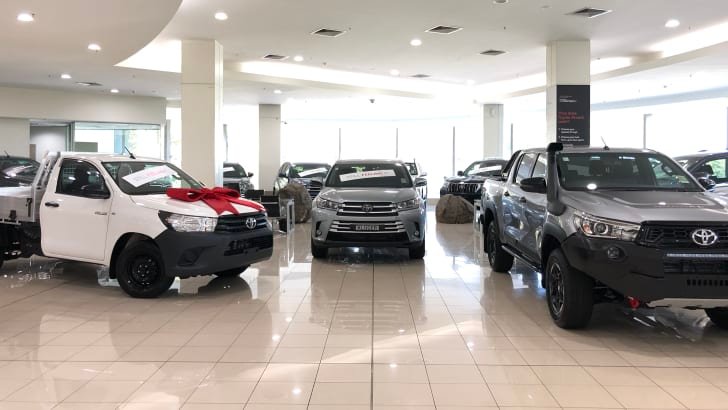
Demand for utes, SUVs and four-wheel-drives surged as business buyers took advantage of the Federal Government’s instant asset write-off scheme and state governments fast-tracked infrastructure projects; sales to business fleets were down by just 4.7 per cent in December.
Private buyers were the driving force last month, however, with sales to individuals up by 40 per cent compared to December 2019.
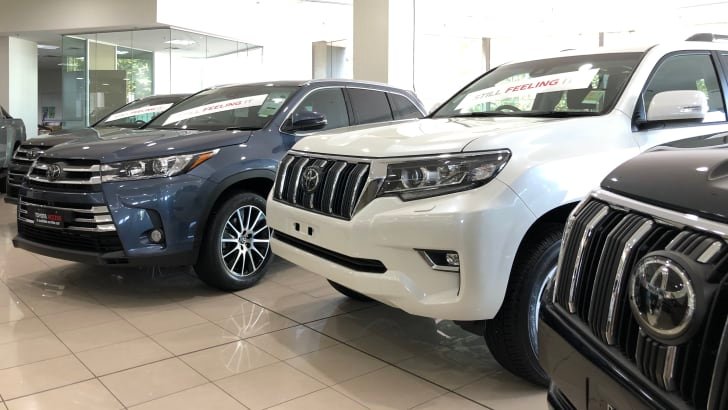
Industry experts say the December 2020 figure could have been higher had many showrooms not run out of popular models such as utes, SUVs and four-wheel-drives.
Toyota Australia president and CEO Matthew Callachor said: “One of the factors that appears to be contributing to the recent upswing in new-car sales is that our international borders are closed.”
Toyota cited Austrade figures that showed Australians spent $26 billion more travelling overseas in 2019 than foreign visitors spent in Australia over the same period.
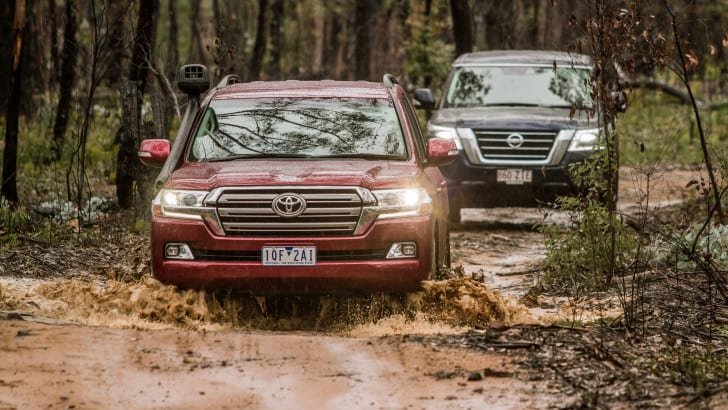
“Forced to scrap international holidays, many Australians who would normally be travelling (overseas) are instead ready to explore their own backyard,” said Mr Callachor. “And many of them are buying new vehicles to ensure their family road trips are as comfortable and as safe as possible.”
The chief executive of the Federal Chamber of Automotive Industries (FCAI), Tony Weber said “unprecedented economic support” by state and federal governments and the “easing of prohibitive lending restrictions” in the last three months of the year, allowed for a “cautiously optimistic outlook for 2021” and that “we are at the beginning of a positive trend”.
The FCAI forecasts that new-car sales in 2021 will bounce back and once again eclipse the 1 million mark.
Mr Weber said there were stock shortages across numerous automotive brands.

“Clearly there are some issues about stock shortages, but (various brands) are working their way through the system,” said Mr Weber.
He said “all the idicators are pretty strong” for a return to 1 million-plus new-car sales in 2021.
“If you look at the last two months of (2020) we believe the economy will turn around,” said Mr Weber. “We are optimistic the market will bounce back, as the economy will, and most probably we will see over 1 million sales again, as it should be.”
Mr Weber said while some of the sales surge in the last two months of 2020 can be attributed to pent-up demand and orders being filled after contracts were signed earlier in the year, he believes the market will continue to grow in 2021.
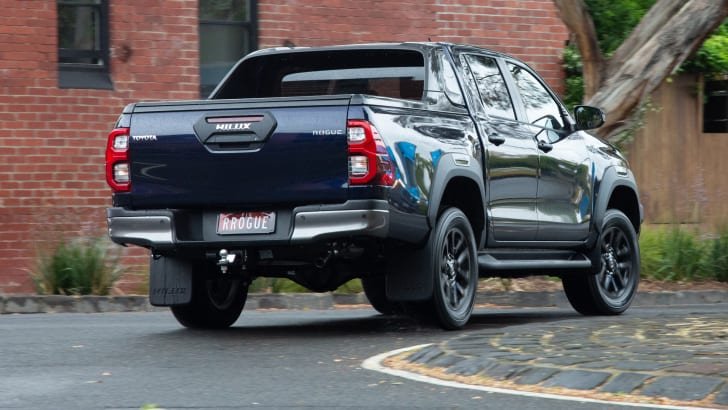
Sales figures for 2020 released today show the Toyota HiLux ute was Australia’s top-selling vehicle for the fifth year in a row, ahead of the Ford Ranger which ranked in second place for the fourth year in a row. The Mitsubishi Triton finished third in the utes sales race ahead of the Isuzu D-Max.
The Toyota RAV4 was Australia’s top-selling SUV for the first time (and biggest selling hybrid), while the Toyota Corolla was the nation’s favourite passenger car for the eighth year in a row, ahead of the Hyundai i30 and Kia Cerato.
Sales of the Nissan Patrol and Toyota LandCruiser also surged as the rest of the market slumped.
Demonstrating that consumers gravitate to brands they trust in times of crisis, Toyota vehicles accounted for 22.3 per cent of all new cars sold in Australia last year. It was Toyota’s second-highest market share result since its previous record set in 2008 (23.6 per cent).
Not only did Toyota as a brand lead every state and territory in 2020, the Toyota HiLux was the nation’s top-seller for five years – and has led new vehicle sales in the Northern Territory for 20 years, Queensland for 14 years, and West Australia for 13 years.
MORE: Industry sales results
TOP 10 CARS IN DECEMBER 2020
| Rank | Model | Volume December 2020 | Change year-on-year |
| 1 | Toyota HiLux | 5572 | up 42.2 per cent |
| 2 | Ford Ranger | 4265 | up 27.4 per cent |
| 3 | Toyota RAV4 | 3542 | up 60.1 per cent |
| 4 | Toyota Corolla | 2516 | down 9.4 per cent |
| 5 | Toyota Prado | 2500 | up 79.9 per cent |
| 6 | Toyota LandCruiser Wagon | 2235 | up 128.1 per cent |
| 7 | Mazda CX-5 | 2060 | up 12.7 per cent |
| 8 | Hyundai i30 | 1996 | up 3.2 per cent |
| 9 | Nissan X-Trail | 1822 | up 18.9 per cent |
| 10 | Hyundai Kona | 1785 | up 93.0 per cent |
TOP 10 CAR BRANDS IN DECEMBER 2020
| Rank | Brand | Volume November 2020 | Change year-on-year |
| 1 | Toyota | 23,470 | up 35.6 per cent |
| 2 | Mazda | 8556 | up 42.0 per cent |
| 3 | Hyundai | 6734 | up 26.1 per cent |
| 4 | Mitsubishi | 6380 | down 9.8 per cent |
| 5 | Ford | 6306 | up 30.2 per cent |
| 6 | Kia | 4700 | down 4.9 per cent |
| 7 | Nissan | 4216 | up 6.8 per cent |
| 8 | Subaru | 3402 | up 18.9 per cent |
| 9 | Volkswagen | 3291 | down 19.3 per cent |
| 10 | Isuzu Ute Australia | 3270 | up 21.9 per cent |
Passenger cars: Top Three in each segment in December 2020
| Micro | Kia Picanto (323) | Fiat 500 (46) | Mitsubishi Mirage (22) |
| Light < $25k | MG3 (707) | Suzuki Swift (515) | Toyota Yaris (506) |
| Light > $25k | Mini (160) | Audi A1 (34) | Citroen C3 (4) |
| Small < $40k | Toyota Corolla (2516) | Hyundai i30 (1996) | Mazda3 (1319) |
| Small > $40k | Mercedes A-Class (530) | Audi A3 (201) | BMW 1 Series (142) |
| Medium < $60k | Toyota Camry (1280) | Skoda Octavia (214) | Mazda6 (148) |
| Medium > $60k | Mercedes C-Class (509) | BMW 3 Series (302) | Mercedes CLA-Class (175) |
| Large < $70k | Kia Stinger (117) | Skoda Superb (33) | Holden Commodore (1) |
| Large > $70k | BMW 5 Series (83) | Mercedes E-Class (76) | Audi A6 (29) |
| Upper Large > $100k | BMW 7 Series (8) | BMW 8 Series (8) | Mercedes-Benz S-Class (7) |
| People Movers | Kia Carnival (119) | Honda Odyssey (102) | LDV G10 (93) |
| Sports < $80k | Ford Mustang (334) | Subaru BRZ (53) | Hyundai Veloster (53) |
| Sports > $80k | Mercedes C-Class coupe and convertible (153) | BMW 4 Series coupe and convertible (86) | Mercedes E-Class coupe and convertible (36) |
| Sports > $200k | Porsche 911 (30) | Ferrari coupe and convertible (16) | Bentley coupe and convertible (9) |
SUVs: Top Three in each segment
| Light SUV | Mazda CX-3 (1333) | Toyota Yaris Cross (517) | VW T-Cross (440) |
| Small SUV < $40k | Hyundai Kona (1785) | Mitsubishi ASX (1756) | Mazda CX-30 (1033) |
| Small SUV > $40k | Audi Q3 (660) | Mercedes GLA (489) | Volvo XC40 (469) |
| Medium SUV < $60k | Toyota RAV4 (3542) | Mazda CX-5 (2060) | Nissan X-Trail (1822) |
| Medium SUV > $60k | Lexus NX (475) | BMW X3 (382) | Mercedes GLC (295) |
| SUV Large < $70k | Toyota Prado (2500) | Isuzu MU-X (861) | Kia Sorento (739) |
| SUV Large > $70k | BMW X5 (367) | Lexus RX (241) | Audi Q7 (234) |
| SUV Upper Large | Toyota LandCruiser (2235) | Nissan Patrol (336) | |
| SUV Upper Large > $100k | BMW X7 (80) | Land Rover Discovery (71) | Mercedes G-Class (64) |
Utes and vans: Top Three in each segment
| Vans < 2.5t | VW Caddy (216) | Renault Kangoo (35) | Peugeot Partner (12) |
| Vans 2.5t-3.5t | Toyota Hiace (1382) | Hyundai iLoad (433) | Renault Trafic (272) |
| 4×2 Utes | Toyota HiLux (1119) | Isuzu D-Max (634) | Ford Ranger (390) |
| 4×4 Utes | Toyota HiLux (4453) | Ford Ranger (3875) | Isuzu D-Max (1775) |
MORE: Industry sales results
2020 IN CHARTS
Top 25 brands
Top 25 models
MORE: Industry sales results
VFACTS 2020 WRAP: New-car sales recovered in December, amid lowest year since 2003
[bsa_pro_ad_space id=15]