
[bsa_pro_ad_space id=14]
Seemingly everyone with any interest in automobiles immediately recognizes the red oval with the white word across its face as the emblem of Bugatti.
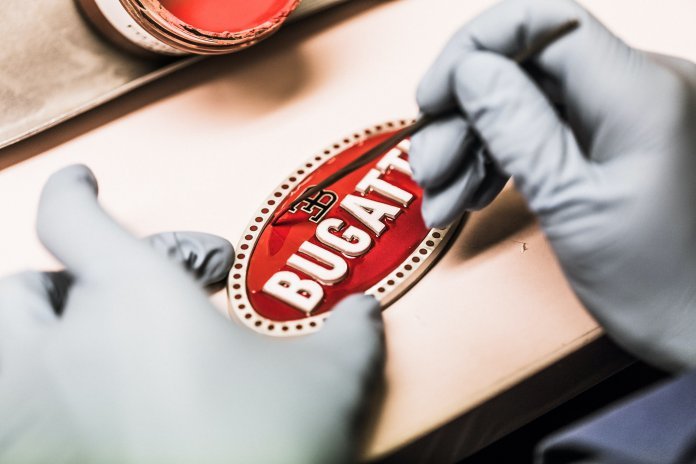
Officially, that badge on the car’s radiator or grille is called “the Macaron,” and the automaker recently issued a lengthy news release about how each of those emblems is handcrafted.
“150 grams of sterling silver. Finest embossing quality, high-gloss enamel and a 3D effect,” the news release began. Sterling silver is an alloy comprising at least 7.5 percent silver by weight, with other metals, usually copper, making up the rest of the alloy.
“Ever since the year the brand was founded, the Bugatti badge, the Macaron, has symbolized exclusivity, luxury, design and outstanding hand craftsmanship on the horseshoe radiator.”
“The importance that the Bugatti Macaron still has for our brand today is shown by its unrivaled quality, the loving attention to detail, and also the weight,” the news release quoted Bugatti president Stephan Winkelmann. “It is one of the very few components on our vehicles where weight does not play a role.
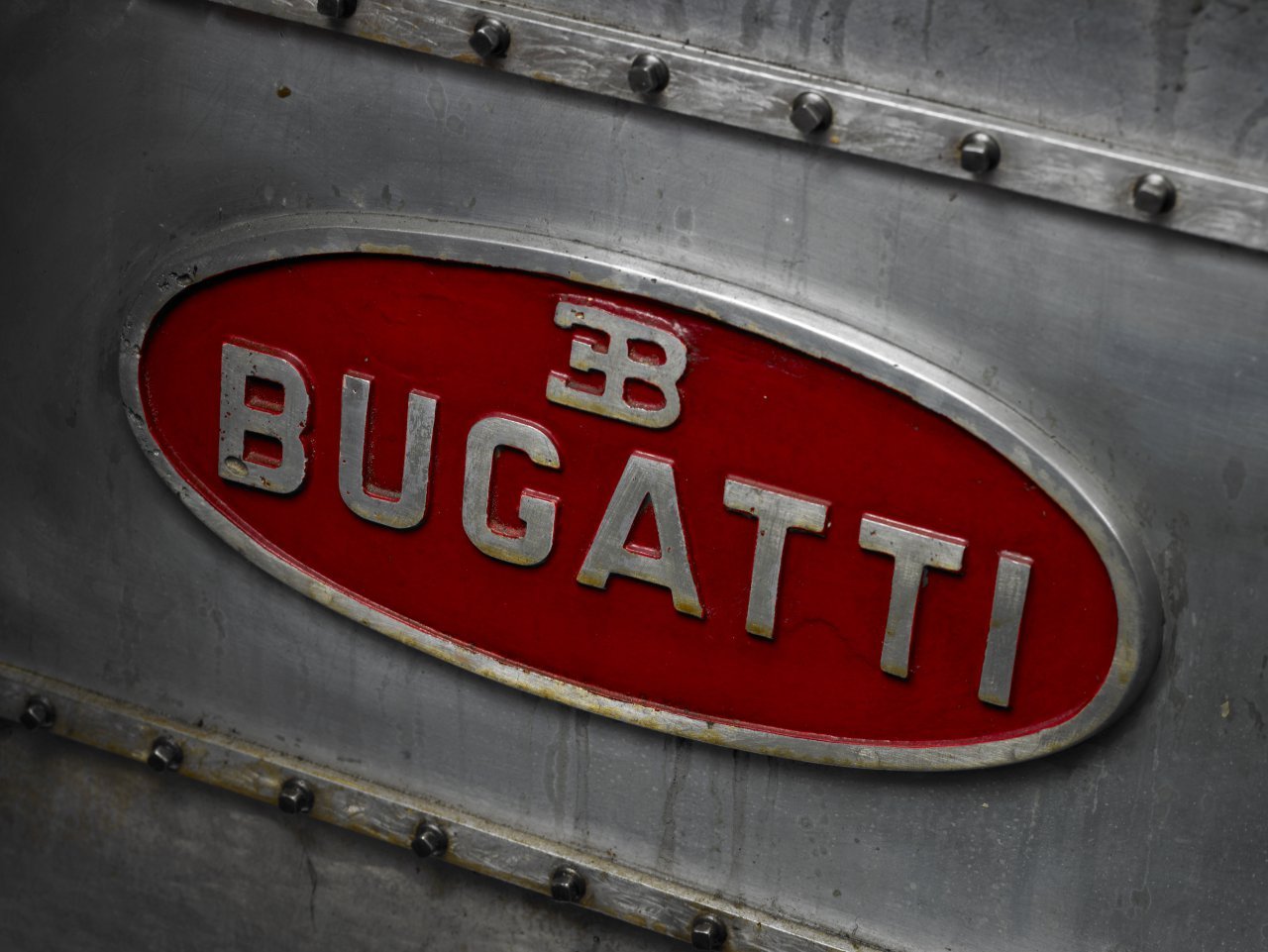
“The solid badge made of 970 sterling silver has a very high-quality design due to its size, and this is more important to us than a lightweight component. The deep-red and unmistakable oval on the vehicle has transported the famous name BUGATTI out into the world ever since the company began, and embodies the symbolic power of our brand myth.”
It was in 1909 that Ettore Bugatti first attached an oval badge made from enameled metal to the radiator grille of the Bugatti Type 13, the first official Bugatti, the company notes.
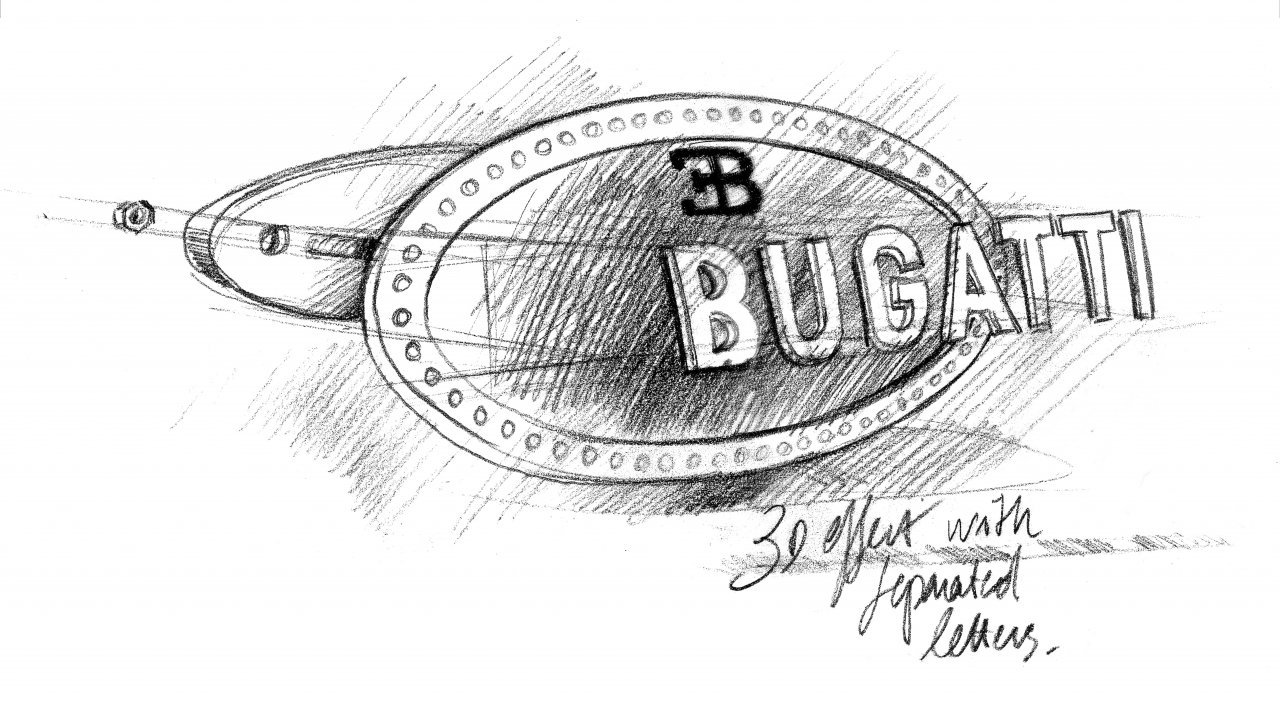
“The idea for the oval shape with white lettering on a red background originated from Ettore Bugatti himself. He had already developed a similar logo for his previous employer, Deutz in Cologne. When he started his own vehicle production, Bugatti intentionally chose a flat, but high-quality brand badge.
“According to the design instructions, the shape formed by cutting a cylinder with a diameter of 45 mm at an angle of 30 degrees.”
Bugatti reportedly opted for the badge because “the popular and almost inflationary use of radiator figures at the time would have only spoiled the design of his vehicles,” the company explained. “The only exception remains the dancing elephant on the Bugatti Type 41 Royale from 1926 – this is a replica of and tribute to a sculpture created by his deceased brother Rembrandt.”
In addition to the red oval and capital letters, the Macaron includes Ettore Bugatti’s initials in black, as well as 60 red dots in the white border around the oval.
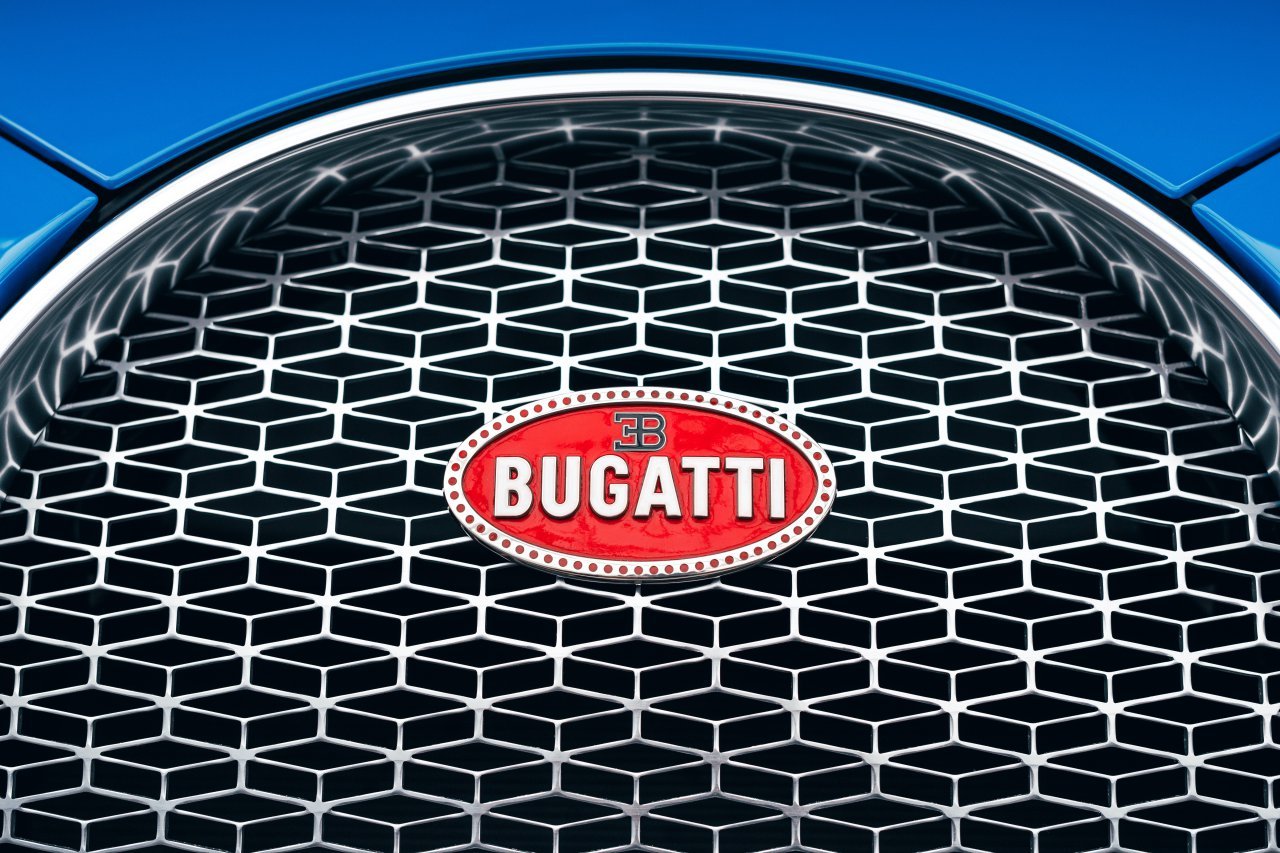
“Red stands for power and passion, white for elegance and nobility, and black for excellence and courage,” the company explained. “According to the legend, the 60 dots symbolize pearls or threads in a style that conformed to the ‘Art Nouveau’ fashion.
“In those days, they were used like splints to produce a permanent connection on mechanical parts – and the reliability and durability of his vehicles was something that was always very close to Ettore Bugatti’s heart during his lifetime. Bugatti changed the appearance of the Macaron only slightly over the course of the years.”
For the past 15 years, the Bugatti emblems have been handcrafted in the Bavarian town of Schrobenhausen by Poellath GmbH & Co. KG Münz-und Prägewerk.
“Such a fine component can be made only by hand in this high quality,” said Poellath chief executive Thomas Demel.
Bugatti adds that Poellath is the only company on the planet capable of producing the badge with the 3D effect from enamel, calling the Bavarian company “a hidden champion that specializes in the production of high-quality metal emblems.”
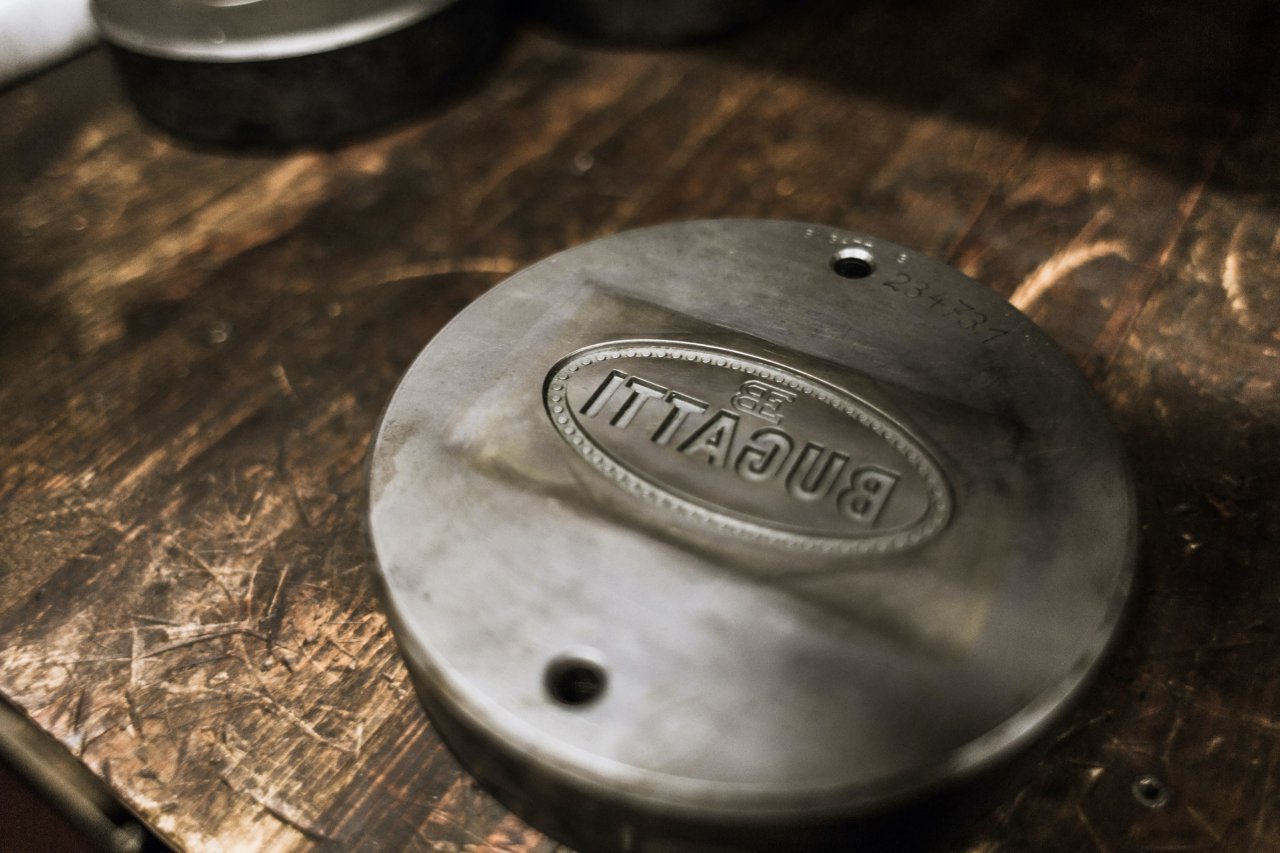
Poellath was founded in 1778 and has been family owned since. In addition to the Macaron, which is done with a black background on select Bugatti vehicles, Poellath produces embossed commemorative coins, badges, awards and medals for clubs and companies.
Each Macaron takes 10 hours of handwork over a period of days and involves 20 workers from various departments. The 970 silver base medal is embossed several times during the process with as much as 1,000 tons of pressure.
“In contrast to casting methods, the contours achieved by embossing are much sharper and of much higher quality – provided that the right tools are used,” Bugatti notes. “After embossing, the emblem passes through the enameling process.
“Enamel is glass that has been fused onto iron, a manufacturing process that goes back over a hundred years. One of the very special challenges when developing the Macaron was the specification that the enamel used had to be free of toxic materials. Half of the enamel typically used before consisted of lead. The enamel now used is made of inorganic compounds such as silicates and oxides, which makes processing significantly more demanding and fuses with the silver when melted.
“The vitreous grains of the granulate melt at extreme heat between 750 to 900 degrees Celsius and are permanently fused with the silver base material in a bond that is difficult to dissolve. A special feature is the fact that the typical convex curvature of the emblem occurs on its own.
“This is because enamel already solidifies at 600 degrees, while the silver underneath continues to contract. The approximate 0.5-millimeters thick enamel layer in the background therefore solidifies much earlier than the metal, and this automatically produces a slight convex curvature of the entire Macaron. This in turn supports the 3D effect.
“Only the raised glass-like compound can then be sanded, finely sanded and polished by hand, while being repeatedly checked during this process.
“Finally, the fastening studs made specially out of one piece are brazed on and the surface is checked once more. Incidentally, the fine, unavoidable pores in the enamel are not a defect, but show the uniqueness of the manufacturing process and make each individual badge a unique one-off.”

[bsa_pro_ad_space id=15]