
[bsa_pro_ad_space id=14]
Rivian’s rough ride continues.
The EV maker is recalling its electric pickup truck and SUV because of a loose bolt that poses a potential crash risk, according to the Associated Press. The recall affects nearly every single EV the company has built since it began production last year.
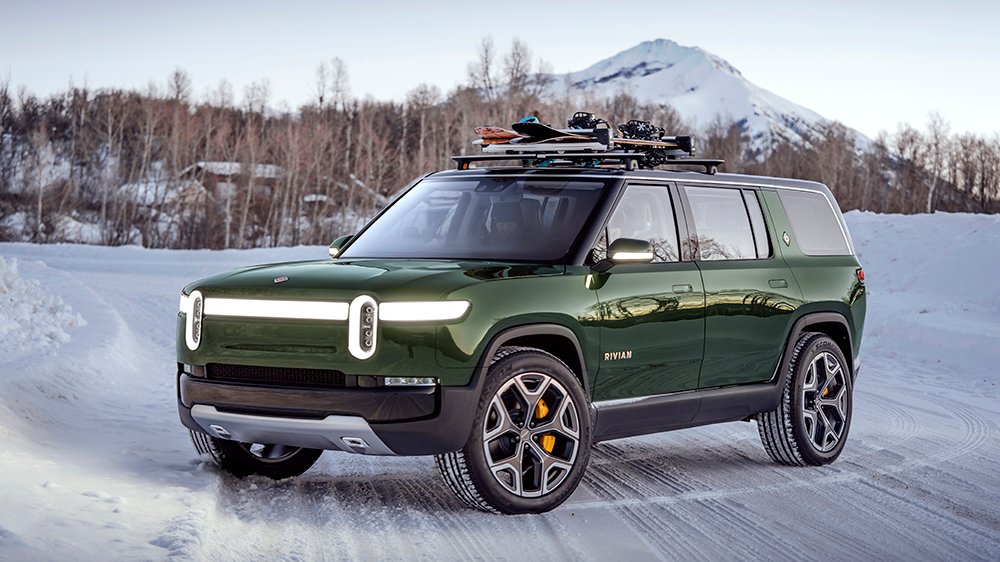
Rivian says that a fastener connecting the front upper-control arm and steering knuckle may be “insufficiently torqued,” which can cause excessive wheel camber or, in rare cases, separation, “increasing the risk of a crash.” The recall covers nearly 13,000 vehicles, all of which were built between December 2021 and September 2022 at the company’s factory in Normal, Ill. The affected models are the 2022 R1T and R1S, as well as the battery-powered delivery van the company developed with Amazon.
Dylan Johnston/Rivian
The company became aware of the issue on September 28, according to The New York Times. So far there have been just seven reports potentially related to the issue, none of which have resulted in injury. Rivian owners who notice any unusual noise or vibration coming from the front of their vehicles are urged to inform the company immediately.
“If you experience excessive noise, vibration or harshness from the front suspension, or a change in steering performance or feel, you should call immediately,” CEO RJ Scaringe wrote in an email to customers late last week.
Fortunately, it sounds as if the issue will be relatively easy to solve. It reportedly takes just minutes to fix at a Rivian service center. The company will also offer mobile service appointments and provide loaner vehicles if a parts replacement is necessary. All of these services will be provided at no cost to Rivian owners.
Although it may be an easy fix, the recall marks yet another setback for the EV maker, which only began delivering the R1T and R1S late last year. The company was briefly the US’s second most valuable automaker in November 2021, but has seen its stock fall by nearly 67 percent this year. In August it announced that it lost $1.7 billion in the second quarter, and expected things to get worse before they got better. So far, that’s proving to be the case.
[bsa_pro_ad_space id=15]