
[bsa_pro_ad_space id=14]
Lamborghini has launched a new research and development program into synthetic fuels, in order to prolong the life of its iconic petrol engines.

 0
0
Lamborghini has established a development project for synthetic fuels – parallel to sister VW Group brand Porsche’s own synthetic fuel program – in a bid to keep customers of its iconic V10 and V12-engined supercars happy in the electric future.
Lamborghini has joined the race to develop environmentally-friendly synthetic fuels – pitched as carbon neutral, with cars only emitting CO2 that has already been removed from the environment – in response to customer demand, to help its petrol engines to live on into the electric future.
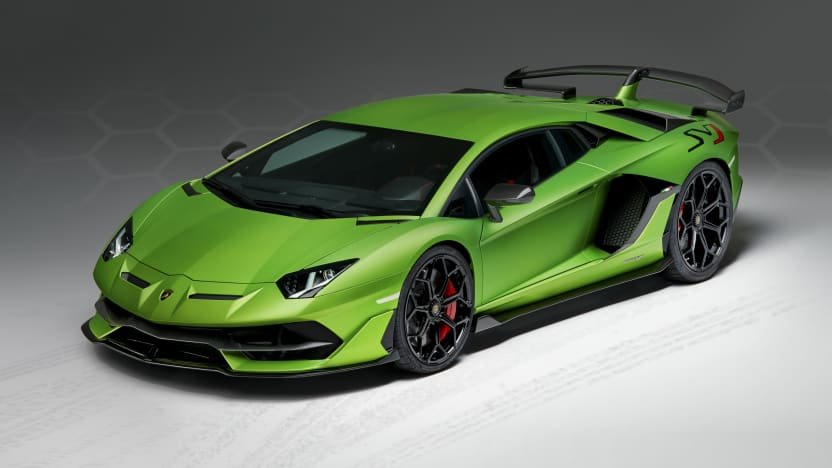
Lamborghini says the company’s first all-electric vehicle will launch in 2028, and will be a ‘2+2’ (four-seat) ‘crossover’ SUV to sit under the Urus, possibly with two doors.
Speaking to Australian media at the launch of the penultimate Huracan variant, the STO, Lamborghini’s Asia Pacific Region Director, Francesco Scardaoni, confirmed the company begin work on a synthetic fuel of its own – despite fellow VW subsidiary Porsche doing the same.
“We’re … keeping the door open for internal-combustion engines with synthetic fuel. So the ideal scenario will be to have the pure-electric cars – like the fourth model we will introduce in 2028 – and the super-sports cars, possibly with internal combustion engines running with synthetic fuel.
“That would be the ideal scenario. So that we still have the pure DNA of super-sports cars for Lamborghini, the drivability of an internal-combustion engine, the emotion in a super-sports car.”
Scardaoni says the decision to invest in biofuel research and development is a recent one.
“We [Lamborghini] just set this project so we budgeted some money for that and we will start operating with an oil company to start the development of this project.”
Lamborghini and Porsche are both part of the Volkswagen Group, and have collaborated in the past, most recently with the Porsche Cayenne and Lamborghini Urus SUVs which are built on the same platform.
“We’re running on [a] parallel path right now. We are investing on our own synthetic fuel channel and Porsche is doing as well … We wanted to have our own way to design and develop this potential way to keep our engines alive,” said Scardaoni.
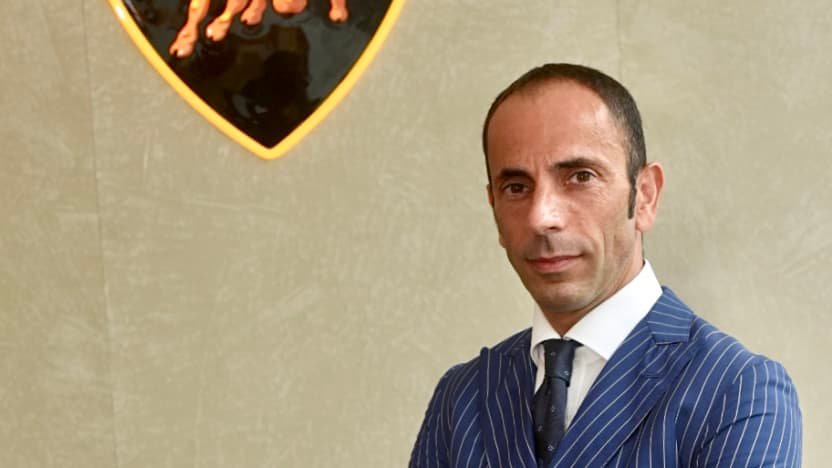
He said customers have been pivotal in encouraging Lamborghini to find ways to keep internal combustion on the agenda.
“You know, there are those purists of internal combustion engines. Of course, we always listen to the voice of our customers and we also take into consideration the existing customers that are really keen on having internal combustion engines [in the future].
“The reason why we started [our rollout of] hybridisation with the V12 naturally-aspirated engine on the new Aventador [successor] is because it will allow us to make it ‘green’, and make sure that also customers [who] are a bit more resistant to this electrification trend [will] be still delighted with the right products that can fit their needs.
“It’s important to design the right powertrain that can fit with our needs, with the brand DNA and with what our customers are asking.”
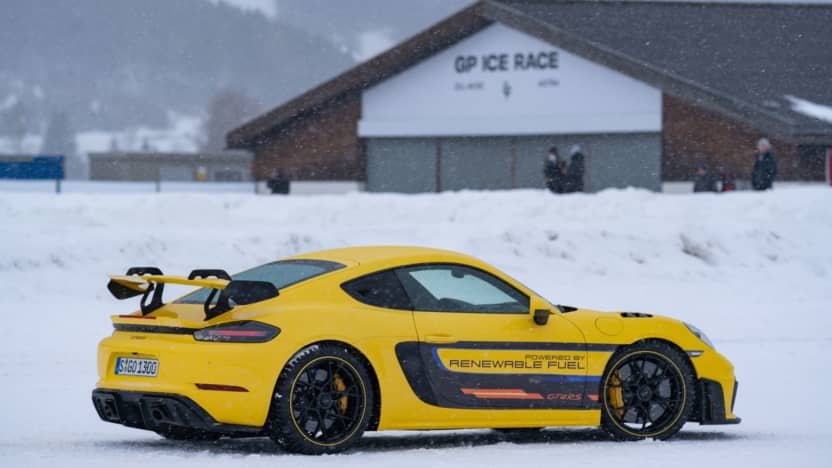
Lamborghini’s decision to not partner with Porsche may come at a surprise, but Scardaoni says it needs to do this to better understand the potential of the new fuels.
“At this point in time, we’re still far away from understanding what can be the fuel and how it can be useful in engines. So that’s the reason why it’s important to have our own project in development of synthetic fuel.
“But we … just kicked off the overall plan, the total investment. So we are still far away. Porsche is much more advanced.”
Scardaoni said any future synthetic fuel-fed internal combustion engines are likely to use hybridisation rather than turbochargers to deliver Lamborghini levels of performance – and the right sound.
“The beauty of having a hybrid system is also to still have the sound of the engine. This of course will be a bridge into a new era that can be either electrified or with synthetic fuel.
“So the reason why we wanted to start with the hybridised powertrain is to keep the sound of the engines alive.”
When asked if rumours that the Huracan replacement would adopt turbochargers to boost performance, Scardaono declined to comment.
“We cannot disclose that kind of information yet.”
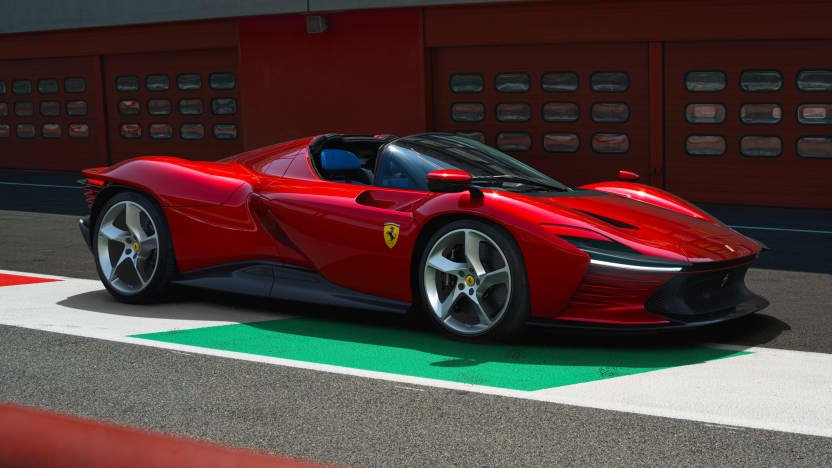
He did rule out any non-electrified, one-off petrol-engined variants of existing models in future, like Ferrari has done with the 2023 Daytona SP3 (above), and other models.
“We are really focusing on the transition [phase] of this hybridisation [plan]. This is [taking] all of our focus in order to create the best cars, cars which are performing better than today’s cars in terms of driving emotion, and sound.
“As of now, we will only focus on those kinds of production cars that will still have again the emotion of sound.”
Scardaoni also said that biofuels and hybridisation would not be deployed separately – so expect future Lamborghinis running synthetic fuels to also be hybrids.

Cars have played a central role throughout Alex’s life, from flicking through car magazines as a young age, to growing up around performance vehicles in a car-loving family.
Read more about Alex Misoyannis 
[bsa_pro_ad_space id=15]