
[bsa_pro_ad_space id=14]
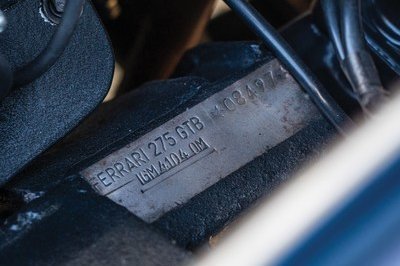
The Ferrari 275 GTB is widely considered to be one of the prettiest grand touring cars built during the sizzling ’60s. Displaying an evolutionary design language influenced by Ferrari’s glorious 250-series models such as the 250 GTO and the 250 GTE 2+2, the 275 GTB came in both short-nose and long-nose specification, with the 3.3-liter Colombo V-12 first featuring two overhead camshafts before Ferrari introduced, in 1967, the 275 GTB/4 with four overhead camshafts. This here is a Series II 275 GTB or, in other words, a long-nosed version built towards the end of the GTB’s production run in 1966. It’s one of the last of just a few dozen 275 GTBs with an all-aluminum body shell that makes the car both lighter and rust-proof. Too bad it’s as expensive as a handful of Ferrari F40s.
Even fans of modern supercars and wedge-shaped obscurities from the ’80s would oftentimes come together and agree that the GTs made in the ’60s are a sight to behold: elongated noses, low rooflines, and a tail that usually ends with a stubby Kammback. It’s a well-known recipe and few applied it better than Ferrari. Designed by the house of Pininfarina, by now an integral part of the Maranello-based manufacturer, the 275 GTB came to sweepingly replace all of the 250-series models. It was designed to be more user-friendly, more practical, but without giving up on performance or the unique feeling of being behind the wheel of a Ferrari. Included by many publications on shortlists of the prettiest Ferraris of all time, the 275 GTB was also a successful race car and it also spawned an open-top version in the N.A.R.T.-commissioned 275 GTS/4 Spyders built between 1967 and 1968 (the 275 GTS featured a completely different Pininfarina body while the N.A.R.T. cars featured Scaglietti bodies in the style of Pininfarina’s Berlinetta design).
[bsa_pro_ad_space id=15]