
[bsa_pro_ad_space id=14]
What are Electric Cars?
An electric vehicle, such as an electric car, uses one or more electric motors powered by a battery pack to accelerate and drive. Depending on the type of EV, the electric motor(s) either assist a conventional internal combustion engine (ICE) or power the car completely.
Benefits and Barriers of Electric Cars
- Reduce CO2 emissions
- Cheaper to own and run
- Require less maintenance
- Quick and fun to drive!
- Can be more expensive to buy
- Public charging stations remain a challenge
- Charging can take time
- Range anxiety
Types of Electric Cars
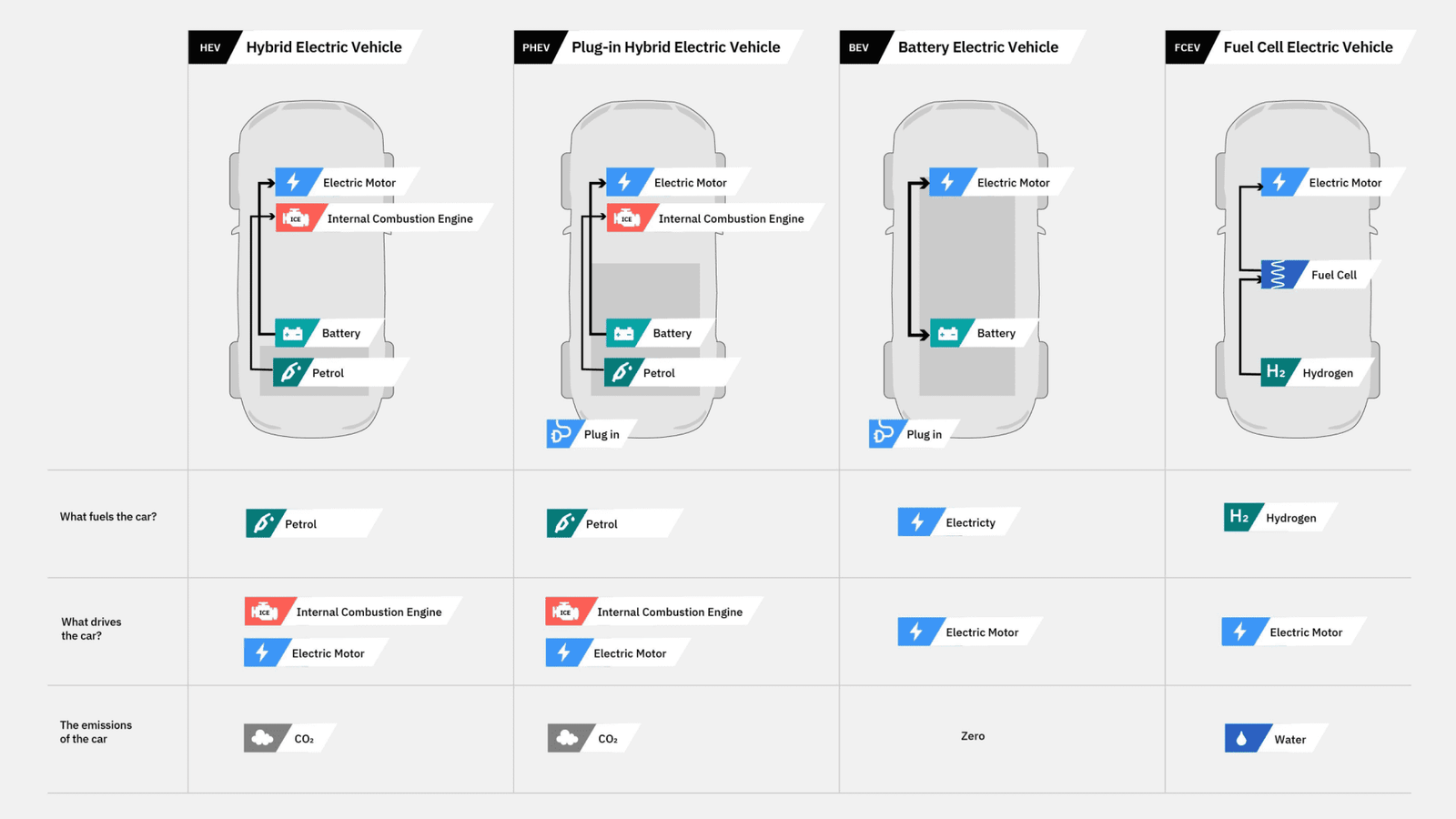
Hybrid Electric Vehicle (HEV)
A closed-loop hybrid is currently the most common type of electrified vehicle. HEVs combine a traditional internal combustion engine (ICE) with a battery and electric motor working separately or in tandem to reduce fuel consumption. The battery in the HEV is charged through driving so they never need to be plugged in. Common HEVs include Toyota RAV4 Hybrid and Lexus RX.
Plug-in Hybrid Electric Vehicle (PHEV)
Like a HEV, PHEVs feature an internal combustion engine working in tandem with an electric motor. However, with a bigger battery, a PHEV can be driven anywhere from 40 to 60km on electric power alone before the ICE kicks in. PHEVs as the name suggests, need to be plugged in to recharge the battery. Popular models include Mercedes-Benz GLC300e Plug-In Hybrid and MG HS Plus EV.
Battery Electric Vehicle (BEV)
The poster children of electric cars, BEVs are fully-electric vehicles featuring a large battery array that powers either one or two electric motors. With driving ranges of anywhere between 300 to 500km, BEVs require charging, either at home or at public charging stations. Popular BDEVs include the Polestar 2, Tesla Model 3 and Porsche Taycan.
Fuel Cell Electric Vehicles (FCEV)
Like BEVs, fuel-cell electric vehicles are powered purely by electricity and generate zero CO2 emissions. But, instead of plugging into the electricity grid, FCEVs generate their own power supply by burning hydrogen which is stored in a tank similar to a car’s fuel tank. No recharging is required. Instead, hydrogen is pumped into the FCEVs fuel tank much like petrol or diesel is into a conventional ICE car. Not currently widely available, although the Toyota Mirai and Hyundai Nexo are both part of ongoing trials in Australia.
[bsa_pro_ad_space id=15]