
[bsa_pro_ad_space id=14]
After writing about the early electric cars displayed recently at the 70th Pebble Beach Concours d’Elegance, I wondered if any old EVs were being offered for sale through the ClassicCars.com marketplace. And I found one, and the date of its creation came as a surprise, at least to me.
I knew that in the early years of the American automobile, about one-third were powered by steam, another third by petroleum distillates and another third by electric batteries. But I figured that once gasoline-fueled cars could be started by a key rather than a crank, electric cars quickly disappeared.
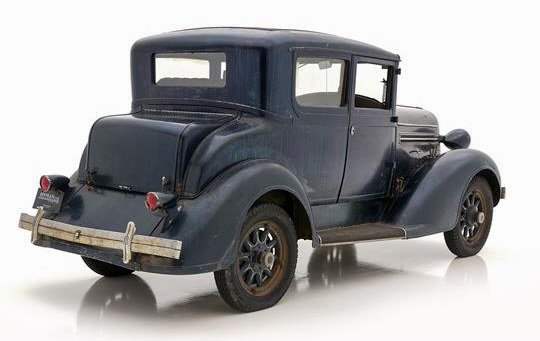
Not quite so, I’ve discovered, as evidenced by the Pick of the Day, a 1937 Detroit Electric Model 99C being advertised on ClassicCars.com by a dealership in St. Louis, Missouri.
“With roots going back to approximately 1907, Detroit Electric is one of the longest surviving car companies dedicated to purely electric power,” the dealer notes. “Before adopting the name Detroit Electric, the company was known as the Anderson Carriage Company, and they were among the earliest champions of battery power for their line of lightweight city cars.
-
Batteries located… -
… both front and rear
“Detroit Electric enjoyed strong sales throughout the teens and into the twenties, peaking at nearly 5,000 vehicles per year,” the dealer continues. “Buyers were offered various wheelbase options and body styles, including open touring cars and a sporty underslung roadster. However, the bulk of production was comprised of fully-enclosed coupes and sedans — which suited their target audience of well-off, city-dwelling women who appreciated the Detroit Electric’s smoke-free running and easy operation, particularly in the days before the self-starter.”
Ah, the self-starter, that 1911 invention by Charles Kettering, an engineer who had been working for a company that made business machines, replaced the hand crank on adding machines with an electric motor and devised a way to do the same thing to turn over a motorcar engine and get it running.
Although electric car sales went into decline, Detroit Electric offered them on a special-order basis until 1939, modernizing their appearance by using coachwork from Willys-Overland and Dodge.
The 1937 Model 99 offered here is “an incredibly well-preserved survivor,” according to the dealer. “It is a very late production model, one of a mere handful of known examples featuring the Dodge-sourced bodywork. It benefits from recent, sympathetic servicing and is offered in good working order, with a charming and endearing patina.”
While the car looks like a Dodge from the front (even retaining the no-longer-needed grille), the dealer notes that its profile reflects 1920s-era Willys.
“The sheet metal of this car is remarkably straight and in good condition, with a heavy patina appropriate for an unrestored, original example,” the advertisement reports.
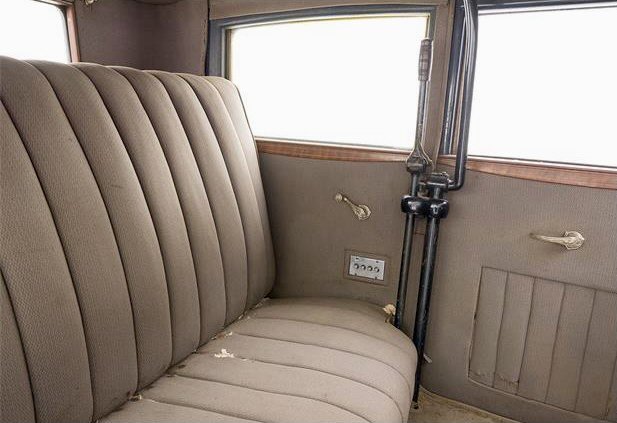
“While Detroit sought to make the styling more conventional, the cabin is anything but that. The parlor-style seating arrangement places the driver on the rear bench seat, with a rear-facing jump seat and no traditional dash or steering column. The Model 99 was undoubtedly one of the last passenger cars sold with tiller steering.
“Like the body, the cabin is exceptionally well-preserved, with original gray fabric trim in very good order. A few blemishes and minor tears are expected, yet overall, the seats, panels, and carpets are surprisingly intact. Fittings like the window winders and door handles have lovely, ornate details reflecting the Model 99’s high-end status.
-
Tiller pivots against B pillar -
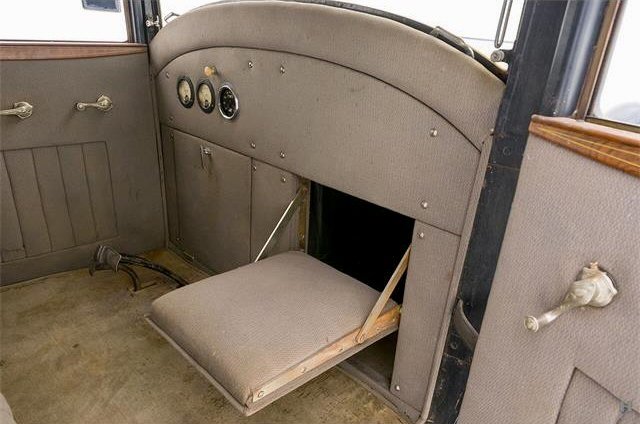
Jump sets up front
“The beauty of early electric vehicles of this type is in their mechanical simplicity. Without a fuel system, cooling system, or many moving parts to maintain, they’re refreshingly straightforward to own and enjoy.
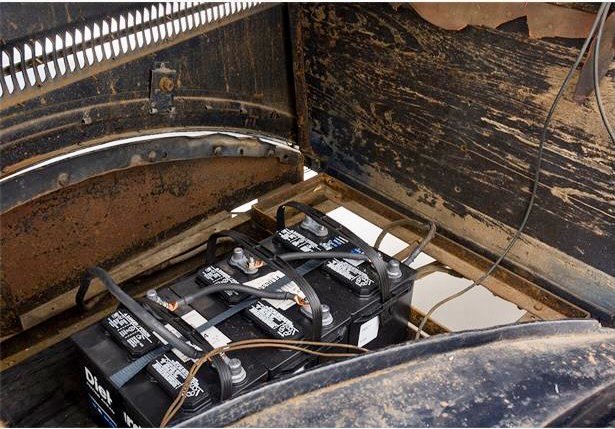
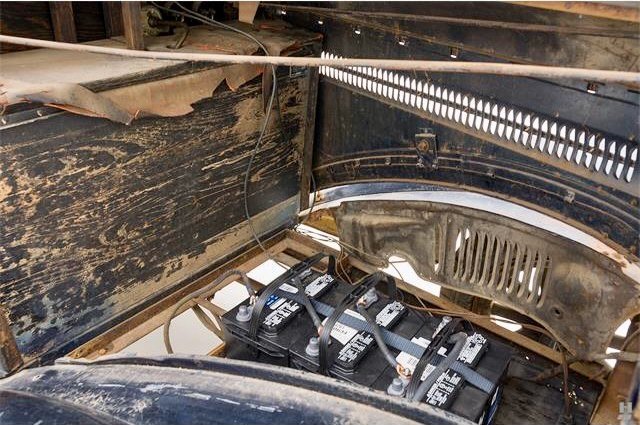
“This example has been fitted with new, updated deep-cycle batteries in the front and rear compartments. It drives quite well and needs little to enjoy to the fullest on the road. It would also be a most welcome participant in preservation class shows or in gatherings of historically significant alternative fuel vehicles that are an increasingly relevant part of international concours events.”
This piece of electric vehicle history is offered for $72,500. To view this listing on ClassicCars.com, see Pick of the Day.
[bsa_pro_ad_space id=15]