
[bsa_pro_ad_space id=14]
- Doors and Seats
- Engine
- Engine Power
- Fuel
- Manufacturer
- Transmission
- Warranty
- Ancap Safety

Our previous update successfully explored the plug-in MG as a ‘forced’ electric driver, but what is it like when left to make up its own mind?
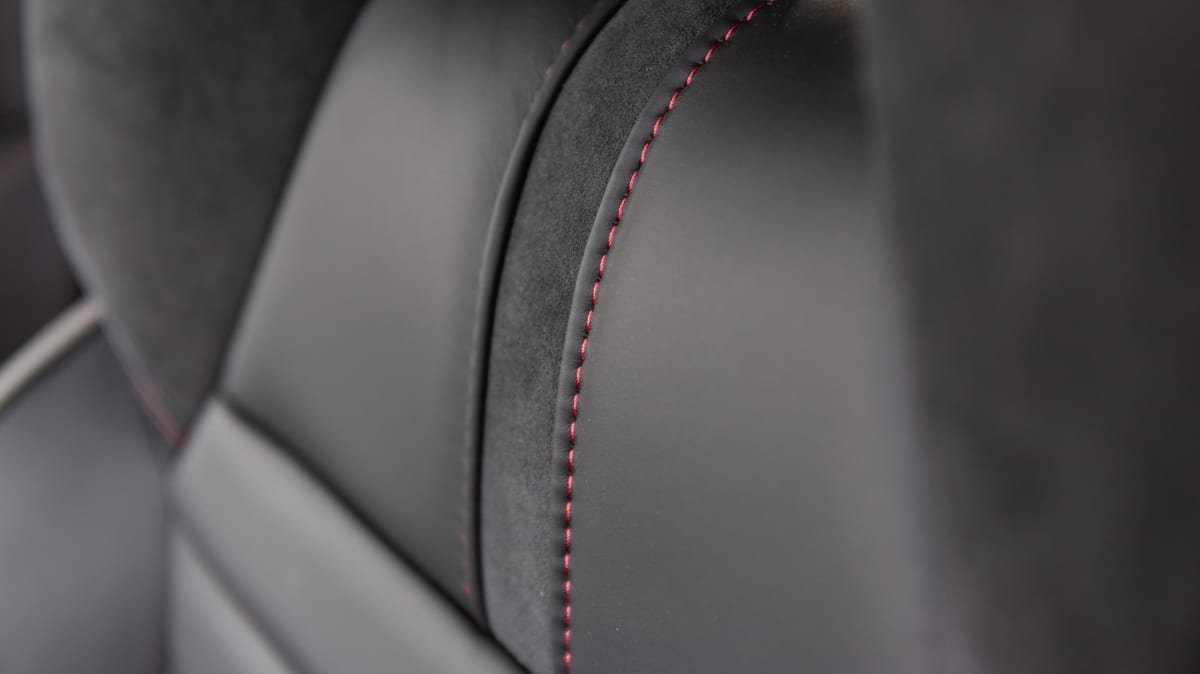
- Roomy and comfortable with really good paint!
- Punchy off the line when using both power sources
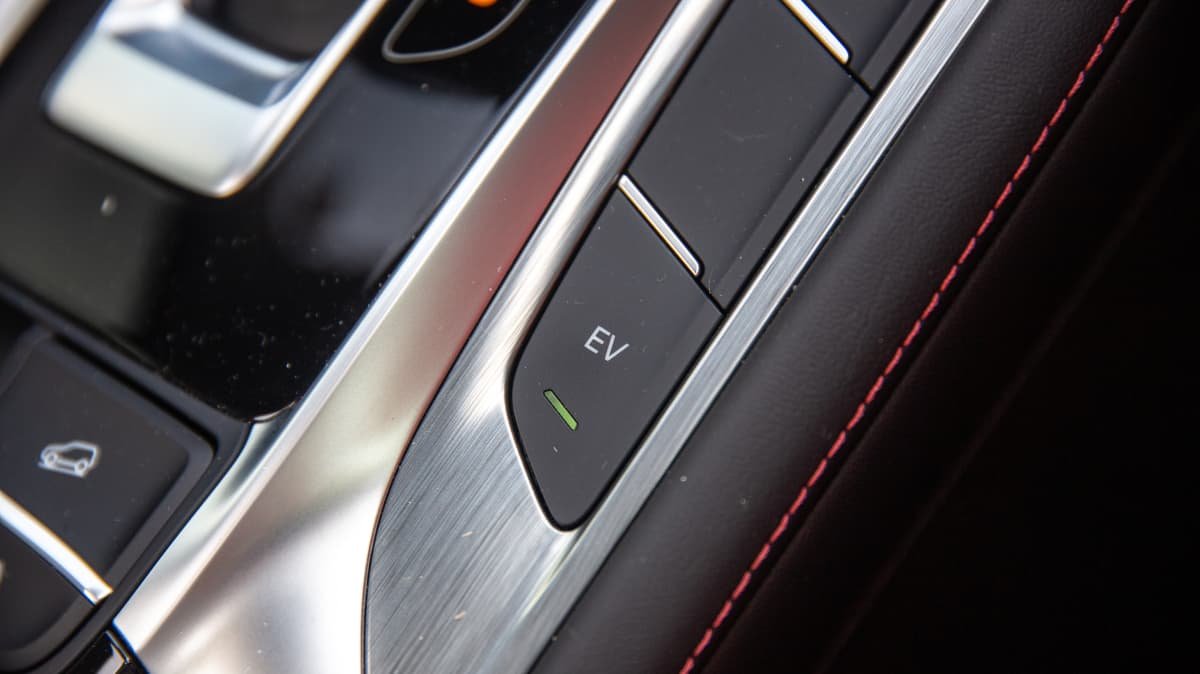
- Use that EV mode button and you’ll be rewarded!
- Prioritses petrol when left to its own choice – which doesn’t help economy
- Petrol engine is buzzy under load
- Option to recharge using the engine, but no ability to adjust friction braking
I’ve said it before, and I’ll say it again.
Electric car ownership, particularly in these early phases, requires a considered level of commitment.
You commit when you buy it, but you need to maintain that pledge as an owner too. It’s not all that hard, but you need to do your bit to get the most out of the car.
To illustrate why, in this update, we’ve essentially done nothing with our long-term MG HS PHEV. Figuratively speaking of course.
What this means is, we’ve let the car make its own decisions. A bit like KITT, but without the accent.
| 2021 MG HS PHEV Essence | |
| Colour | Clipper Blue metallic |
| Price (MSRP) | $47,990 drive-away |
| Options as tested | None |
| Servicing costs | $903 (3 year) / $1589 (5 year) |
| ANCAP safety rating | Five stars (2019 – HS range) – PHEV as yet untested |
| Warranty | Seven years / unlimited km |
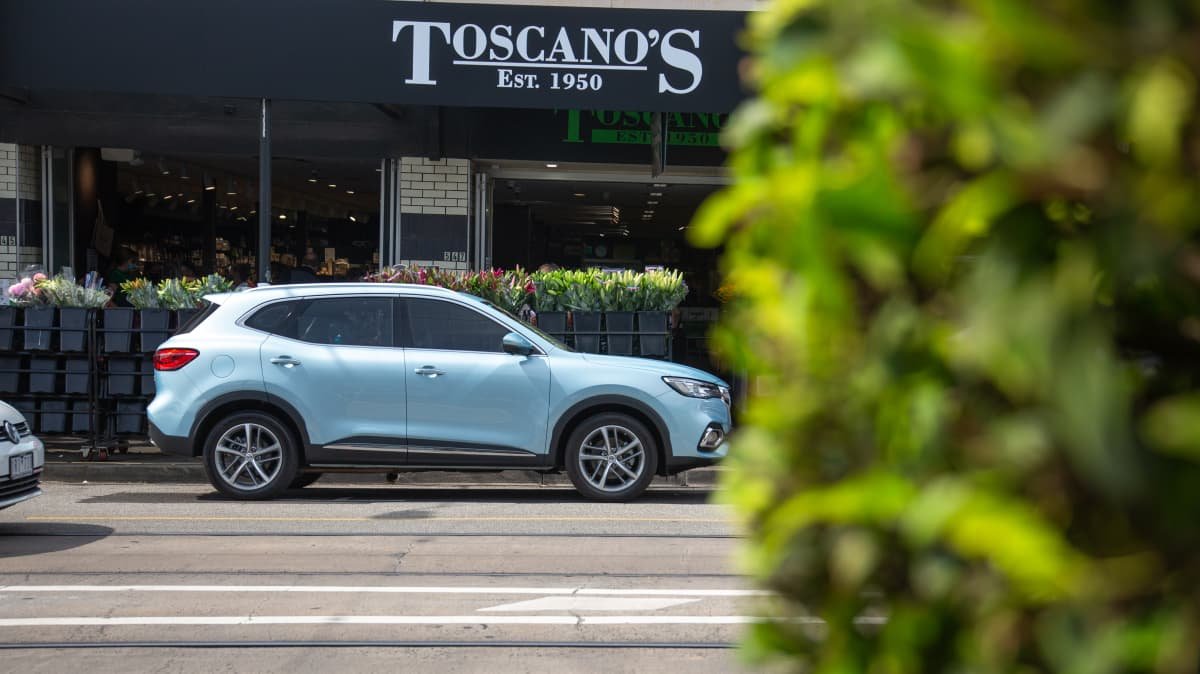
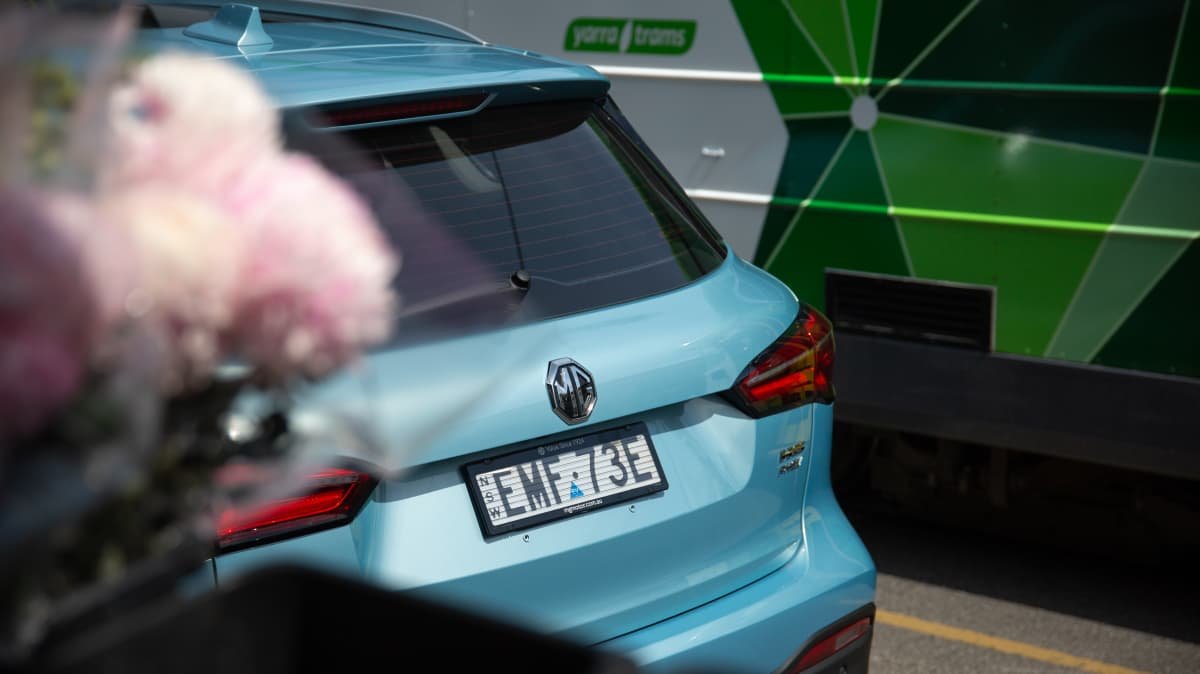
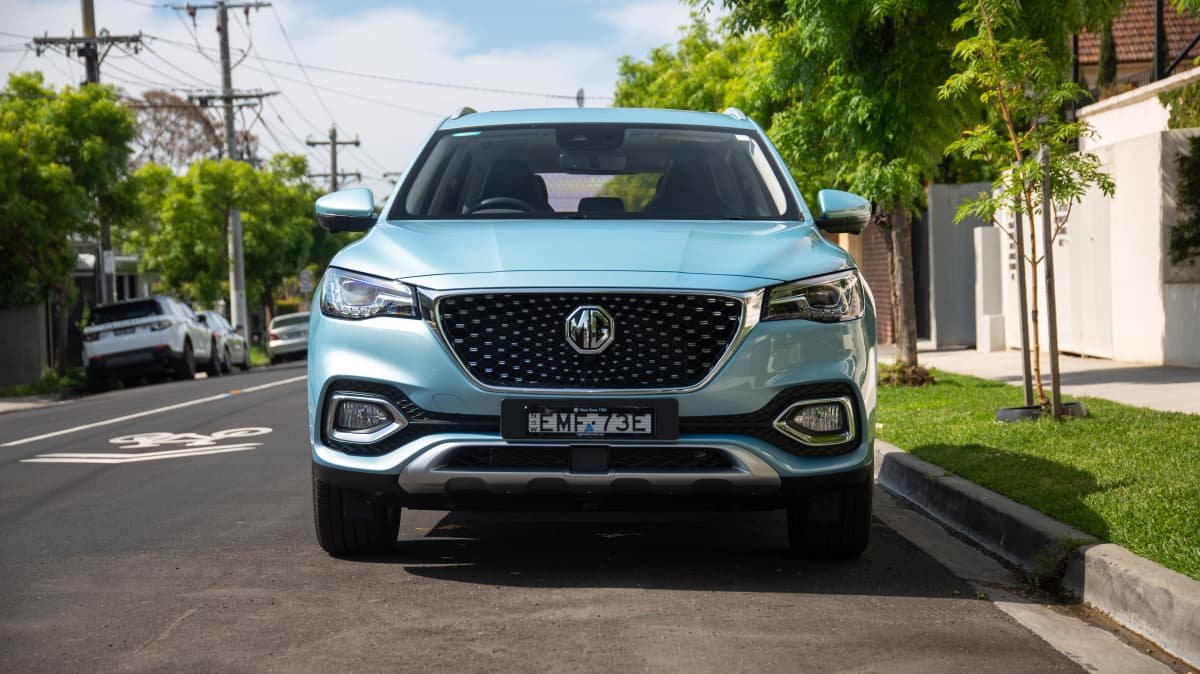
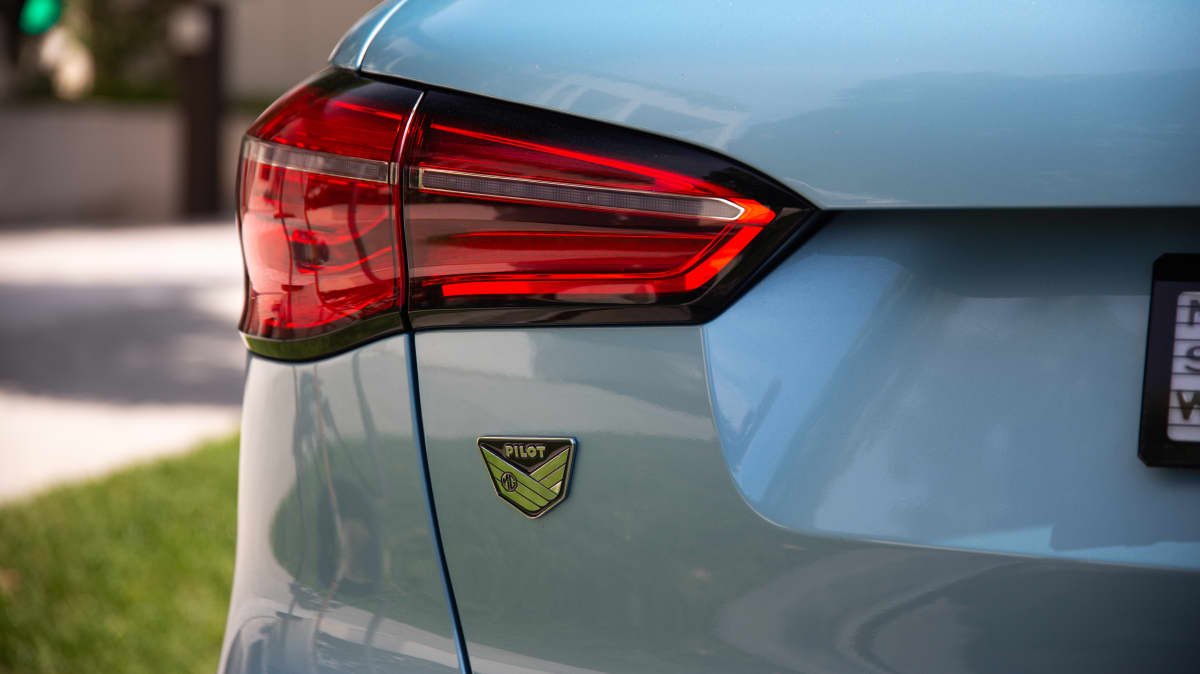
To recap, our 2021 MG HS Plug-In Hybrid Electric Vehicle (PHEV), which looks particularly sharp in its signature colour of Clipper Blue, can be yours as tested for $47,990 drive-away.
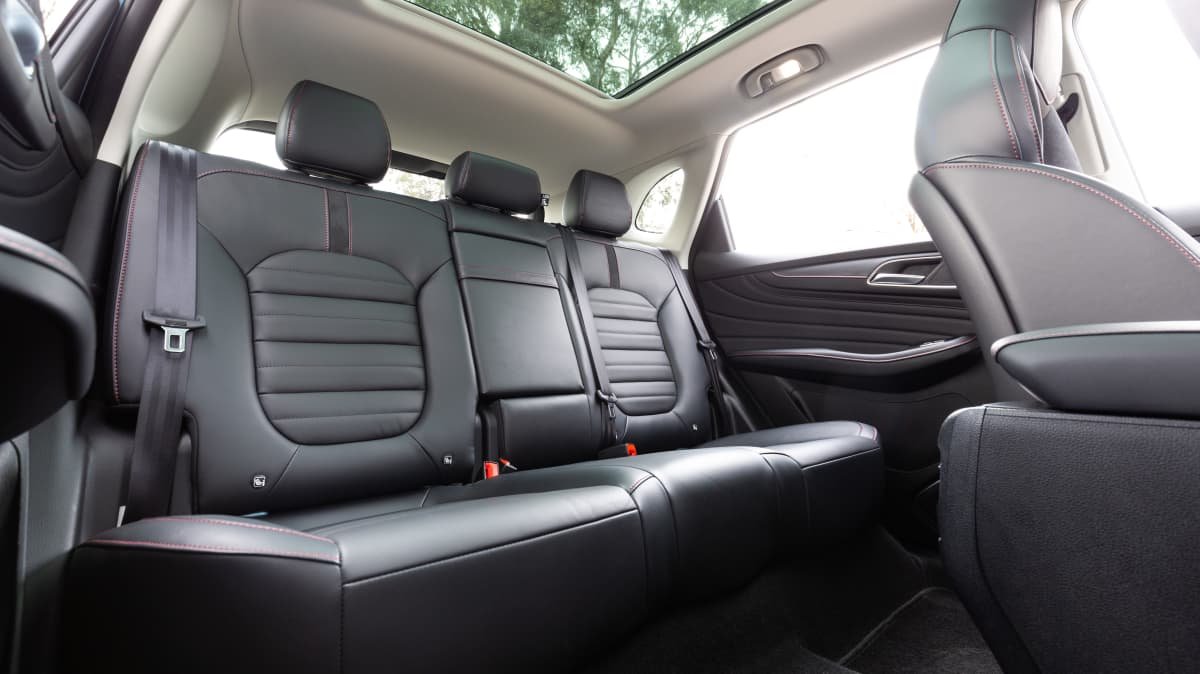
All the features on our car, including the heated seats and large panoramic sunroof, are standard equipment, and we’re using it as a predominantly urban commuter around the inner Melbourne suburbs.
Turns out that due to the way the car operates, this wasn’t such a bad idea.
You see, as we discovered in our previous update, the MG can be ‘forced’ into an electric drive mode, which is a place where it works really quite well. We were able to repeatedly stretch to the 60km electric range as claimed, and with daily electric top-ups, sustained the quoted 1.7L/100km fuel use.
It’s worth noting too that the ‘EV entry mode not support’ message that regularly greeted us on chilly mornings has ebbed away with the more mild weather.
Get a great deal today
Interested in this car? Provide your details and we’ll connect you to a member of the Drive team.
The car needs to use the petrol engine to get all the electric hardware up to an acceptable operating warmth, but as the ambient temperature has increased, the plug-in HS has been good to go electric as soon as it wakes up.
But what is it like if you don’t push the EV-mode button?
To find out, we have let the 2021 MG HS PHEV make up its own mind as to what power source it will use – the 1.5-litre turbocharged petrol engine or the 16.6kWh battery pack.
Many plug-in hybrid electric vehicles (PHEVs) will prioritise the battery use when the car is at a high charge state and will only use the petrol engine when extra performance is required, or when you’re running low on electrons.
As it turns out, the MG does the opposite.
Fire it up, wait patiently for all the instruments to load, and if it’s a nice day you’ll glide away silently on electric power. So far so good.
But pick up the pace beyond 30 or 40km/h and you’ll feel the 1.5-turbo sputter to life. And basically, that’s where it will stay.
Sure, in heavy traffic the car will revert to battery power when the stop/start system engages, but anything above a crawl will trigger the engine again.
| 2021 MG HS PHEV Essence | |
| Length | 4574mm |
| Width | 1876mm |
| Height | 1685mm |
| Wheelbase | 2720mm |
| Boot volume | 451L / 1275L |
| Towing capacity | 1500kg braked, 750kg unbraked |
The upside of this is that the MG is pretty sprightly off the mark.
With a combined output of 209kW, the petrol-electric driveline is capable of a 6.9-second sprint to 100km/h. This translates to swift movements in traffic and an impressive skill of getting up to speed for merging at highway speeds.
But, there is a downside.
The thrummy nature of the four-cylinder engine makes the MG sound particularly buzzy as you build through the rev range. It’s not a particularly rich or exciting note either and offers noticeable vibration at lower speeds.
The car will tend to switch back to electric power when you drop below 20km/h or so, which triggers a noticeable friction change through the brake pedal. There are no safety concerns here, the car stops well enough, it’s just that under the light pressure used when approaching an intersection, you can feel the car’s rolling friction lessen somewhat and it seems to slow ‘less’ after the handoff to electric power.
Chalk that one up to ‘curious’ rather than ‘concerning’ though.
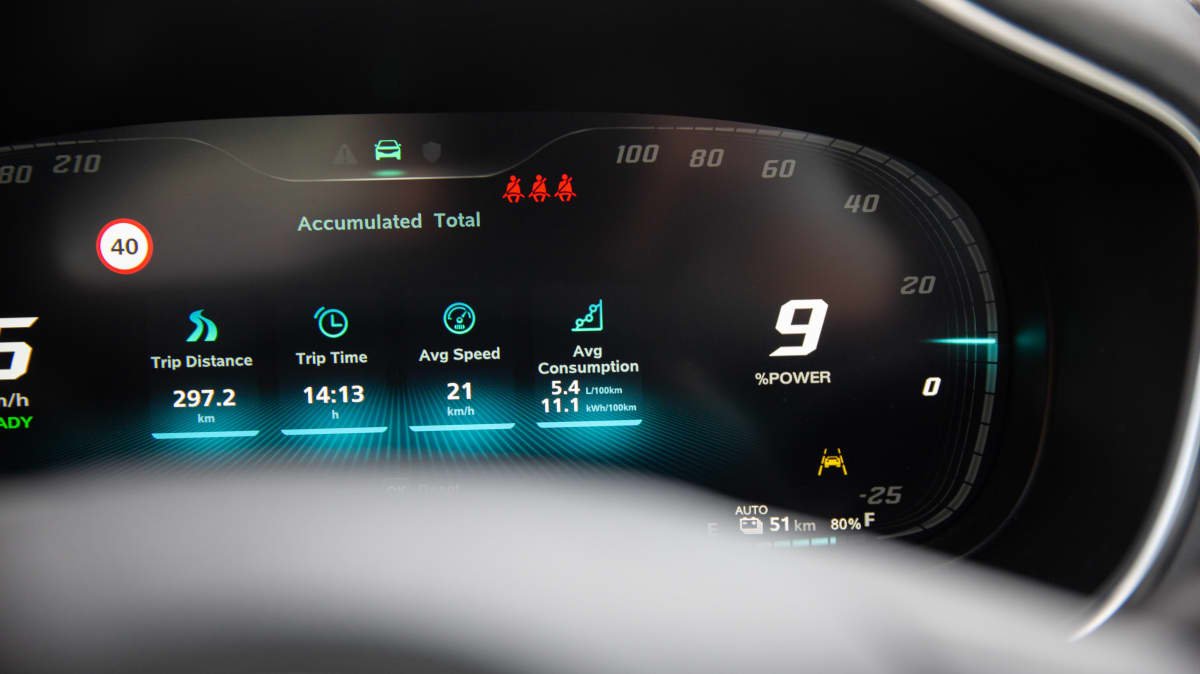
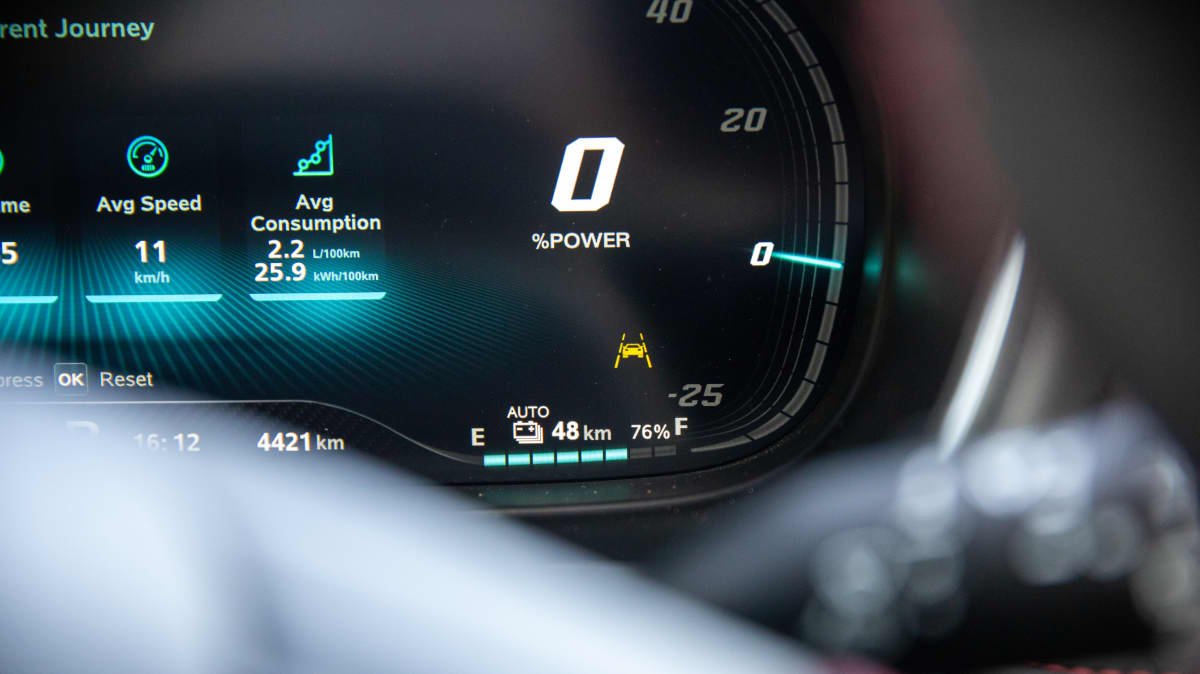
The big-ticket item, however, is that when used like this, the HS PHEV is pretty thirsty.
We have regularly seen fuel use over the 7.0L/100km mark, which in itself isn’t high, and is on par with the non-hybrid HS… But this isn’t the non-hybrid HS. And yes, I chose a double negative on purpose.
The PHEV has a claimed combined-cycle consumption of just 1.7L/100km (which we were able to meet when prioritising electric drive), or to be fair a claim of 5.8L/100km on an urban cycle.
What’s more, the car continues to use and deplete the battery to supplement performance, so you end up with more fuel consumption and the same overall range for minimal tangible benefit.
If your route is chock-full of stop-start driving, then the low speeds will keep everything in check, but if you’ve got stretches with sustained 60km/h or above speeds, the engine will keep running and that fuel will keep sipping.
Things get a bit sillier if you opt to recharge the battery with the petrol engine too.
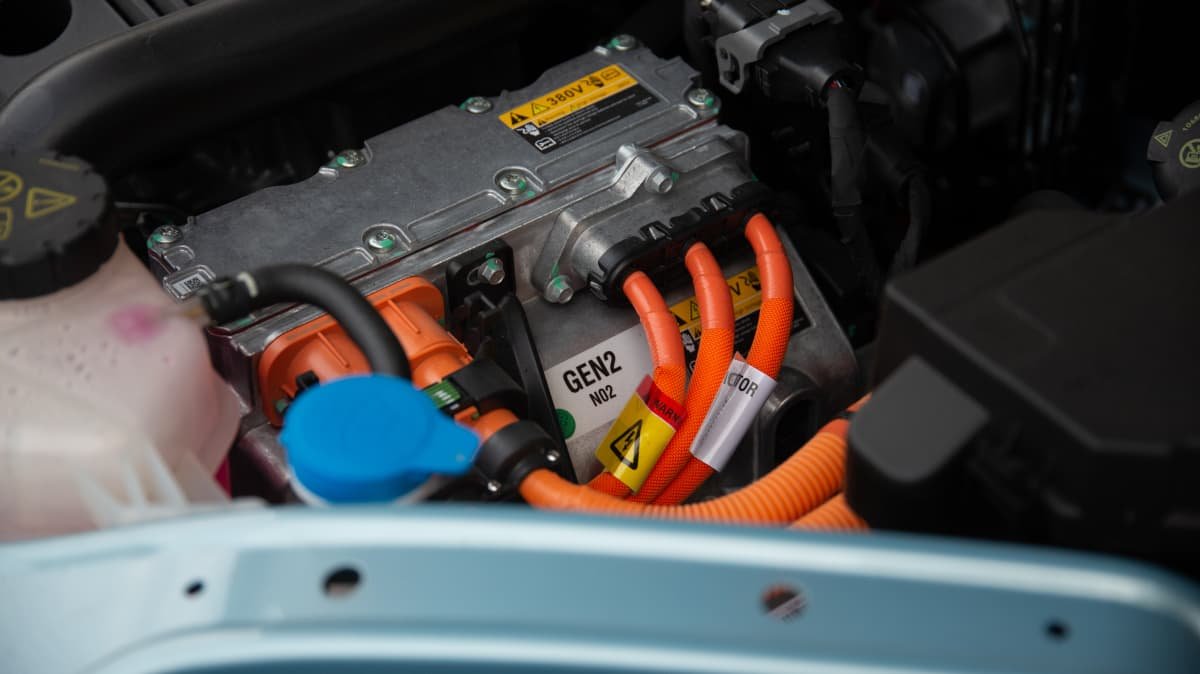
Fuel use here jumps into the low teens, as the engine idles around 2000rpm to help recharge the lithium-ion pack.
I also experienced this with the Mercedes-Benz C300e PHEV, in that using the already small petrol engine to drive the car while replenishing the electro-storage, pushes your fuel use into V8 territory and creates an energy production and use dynamic that just doesn’t stack up.
Running the engine is the only effective way to restore the battery while on the hop, too, as there is no adjustable regenerative braking or friction assistance to act as a rolling dynamo.
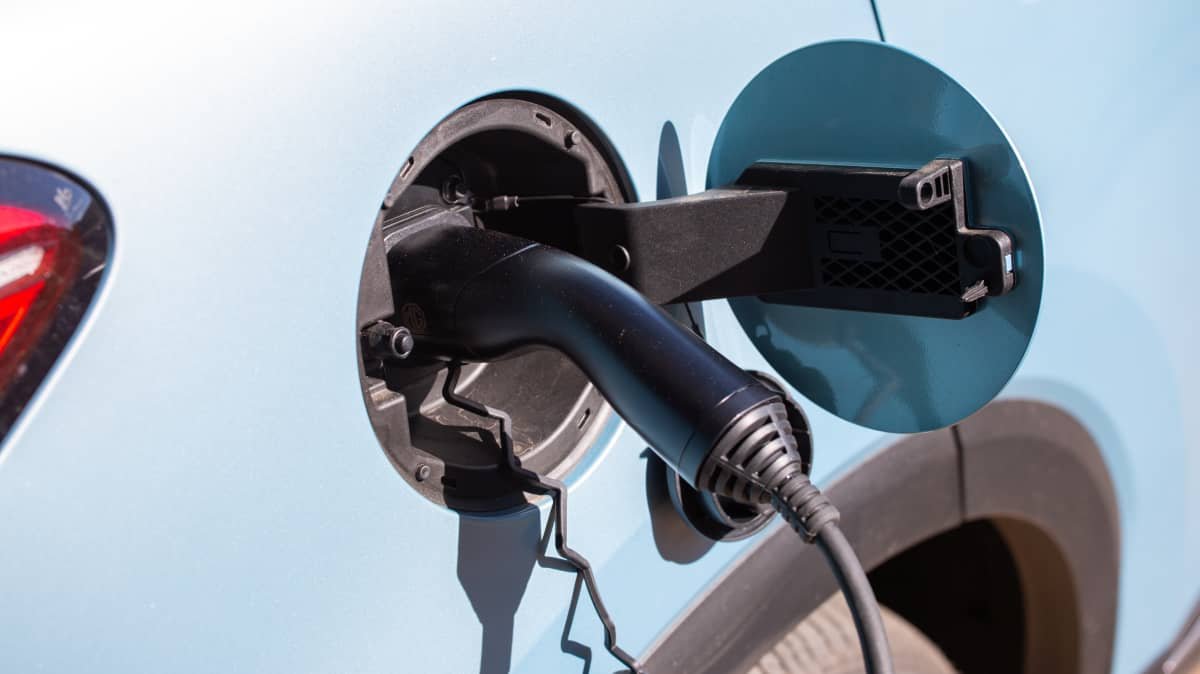
But as I said at the beginning, owning an electric car, even a plug-in one, requires you to put a bit of effort in to get the best result.
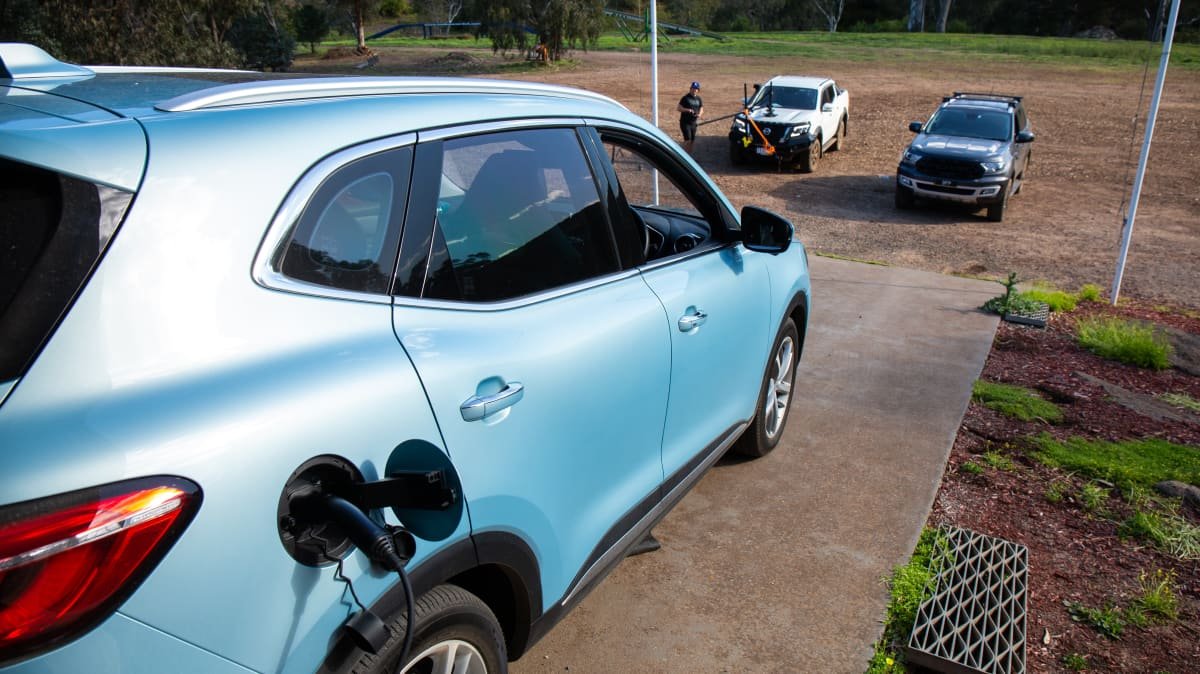
So take a beat, plug it in, and go back to encouraging the HS to use its battery. Almost instantly, the world makes more sense.
This is a better electric car than it is a petrol or even hybrid one, which is why that commitment shown when you buy it needs to be carried through as you own it.
Simply put, you need to plug in your plug-in to get the most out of it.
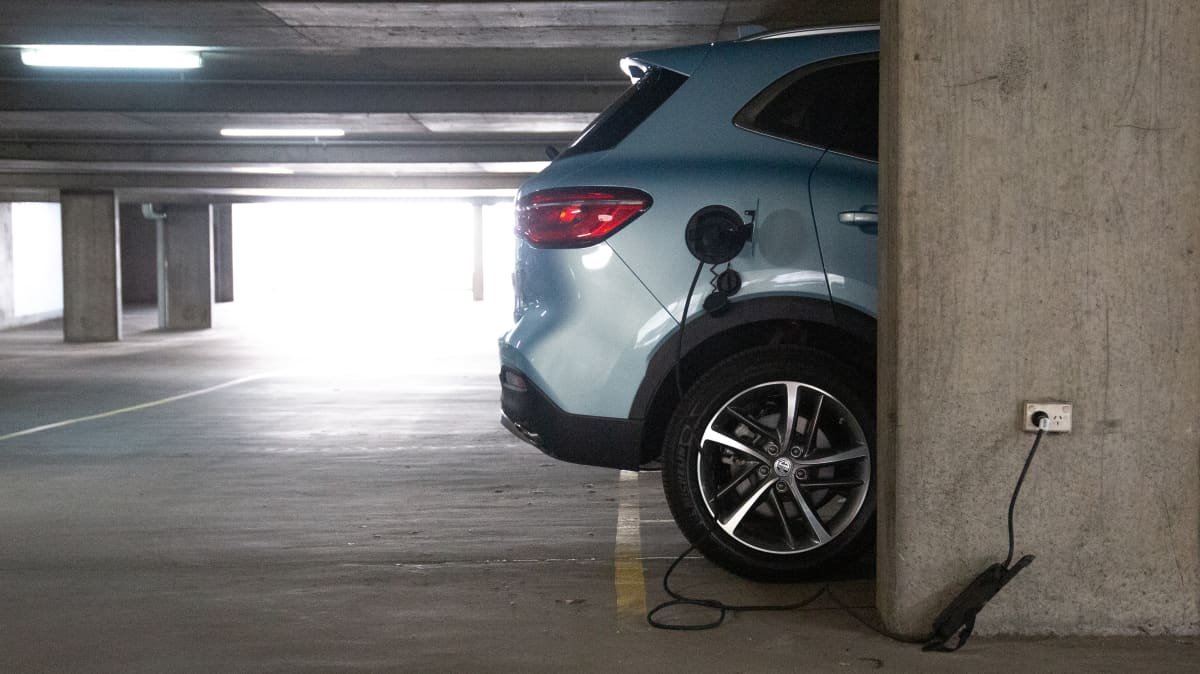
As the HS has been parked on the street at home, it gets recharged at the office each day to keep the battery topped up. Even on the portable charger on a 240-volt socket (up to 2.4kW charge rate), the car can be easily returned to 100 per cent during a working day.
And even if I miss a day or two, the 60km all-electric range is enough for near fuel-free commuting all week.
Yes, 60km won’t get me everywhere, so it is good to know the petrol engine is there if I need it, but if you treat the PHEV like an EV (which speaks to MG’s new naming convention), it actually works really well.
Over about 500km, my combined fuel use is back to 3.6L/100km, which included a few longer runs with prolonged 80km/h cruising.
| 2021 MG HS PHEV Essence | |
| Engine configuration | 1.5-litre four-cylinder turbo petrol with single electric motor |
| Power | 189kW combined 90kW electric motor 119kW @ 5500rpm petrol engine |
| Torque | 370Nm combined 230Nm electric motor 250Nm @ 4300rpm petrol engine |
| Transmission | 10-speed automatic |
| Drive type | Front-wheel drive |
| Tare weight | 1755kg |
| Fuel consumption (combined-cycle claim) | 1.7L/100km |
| Battery and range | 16.6kWh battery / 52km claimed WLTP electric range |
| Key competitors | Toyota RAV4 Hybrid | MG ZS EV | Mitsubishi Eclipse Cross PHEV |
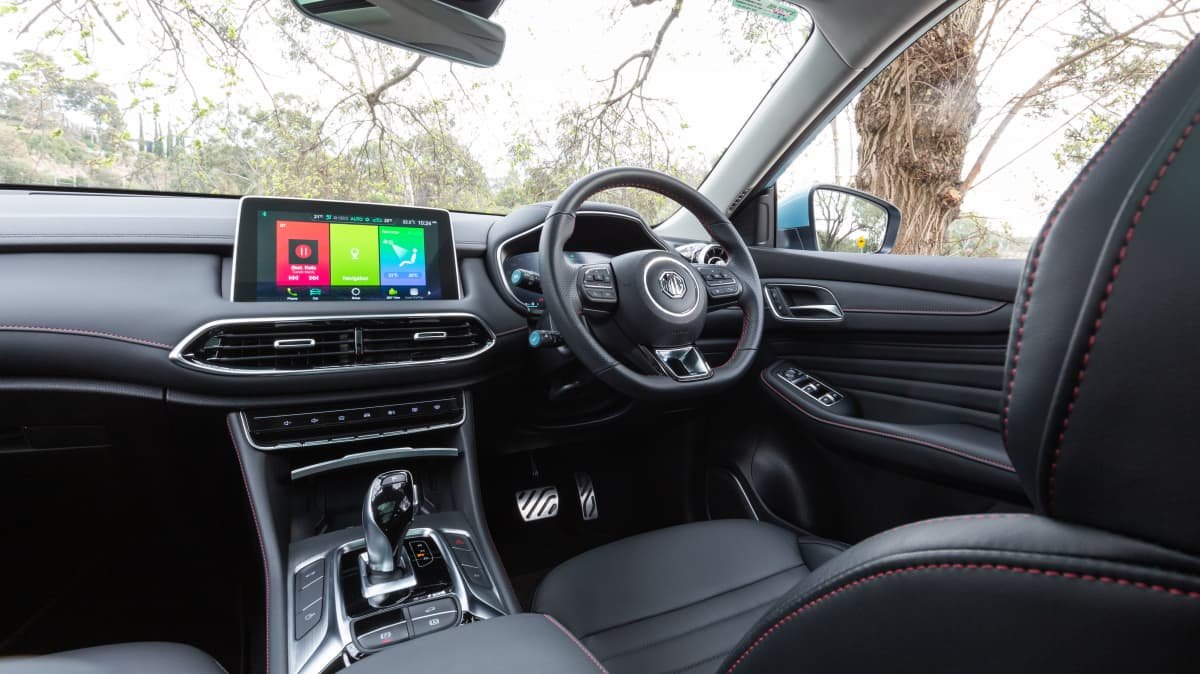
Sure, the suspension needs some damping tweaks, as you’ll ‘bounce’ a bit after the shock absorbers settle after a bigger bump, but it is comfortable enough and there’s plenty of room.
Does the infotainment system take a while to boot up? Absolutely. Plus it can be fiddly, will occasionally switch off Bluetooth at random, and could do with a DAB digital tuner, but it all generally works well enough, and if you keep your phone plugged in Apple CarPlay is a pretty reliable fallback.
And those ‘tap down for down and down for up’ volume buttons? Yeah, it’s the same approach taken by the new Toyota LandCruiser. It doesn’t make them good, but it doesn’t make them isolated either.
I would prefer if the MG HS PHEV erred to electric as its primary drive choice, but to do so is as simple a commitment as pushing a button.
This and plugging it in each day at the office are now second nature – two simple steps to get the most out of the PHEV platform.
In our final instalment, we’ll summarise the driving efficiency of the HS PHEV, but also look into the areas where MG should devote some time to turn what is really a very good little car into a properly impressive one.
Read more about James Ward
[bsa_pro_ad_space id=15]