
[bsa_pro_ad_space id=14]
- Doors and Seats
- Engine
- Engine Power
- Fuel
- Manufacturer
- Transmission
- Warranty
- Ancap Safety

We plug in our plug-in and live the electric life in the 2021 MG HS PHEV
- Real world range is achievable – 60km on a single charge
- Real world economy is achievable – 1.9L/100km
- Paint quality really impressive
- EV entry mode not support – OK Yoda
- Charging port seems fussy – and occasionally unlocks
- Feedback on charging not clear
“How far does it go?”
“What is the real efficiency?”
“How often do you charge it?”
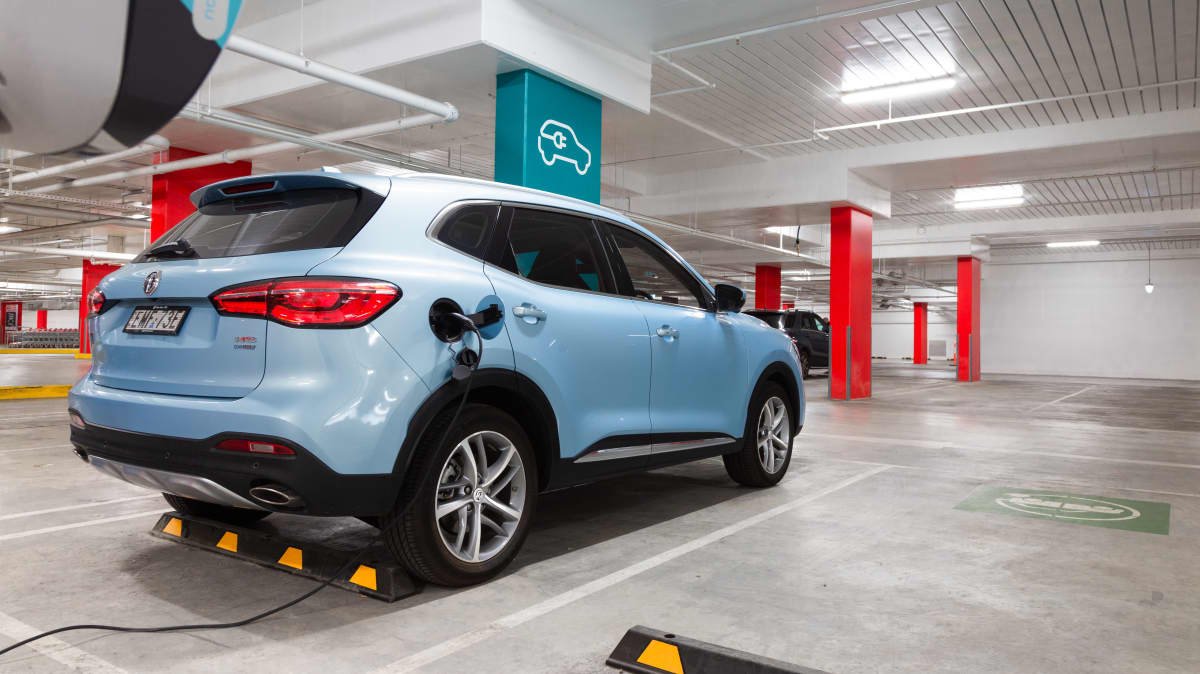
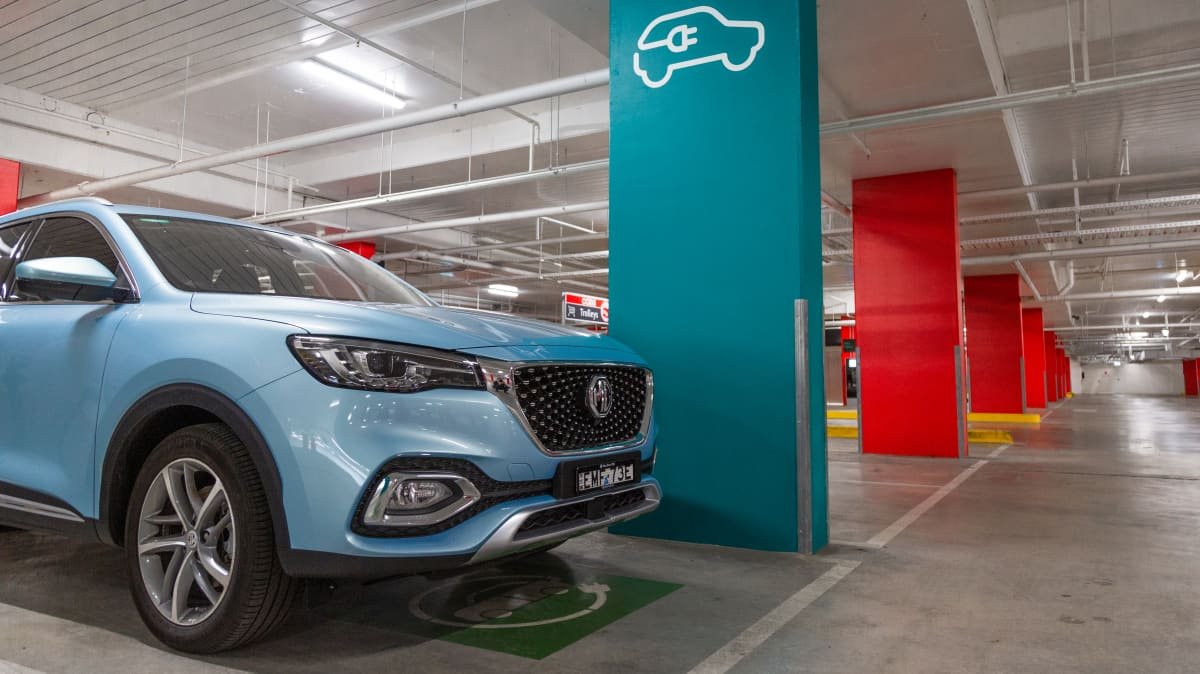
“That’s a nice colour, what is it?”
Four real questions asked of our 2021 MG HS PHEV Essence long termer by random passers by. All fair points mind you, as the world of electric-driving or partial electric-driving is still one of many questions.
So, for the last month I have focussed on being able to diligently answer all four of these key queries.
We’ll start with the easy one, as yes the Clipper Blue paint looks good and is of a really high quality finish. The HS is a really nice looking car, not ground-breaking or head-turning mind you, just clean and smart, and quite at home among cars which vastly transcend its $47,990 drive-away price.
But a usable plug-in hybrid cannot be judged on a pretty blue paint job alone, so on to the more serious questions.
| 2021 MG HS PHEV Essence | |
| Colour | Clipper Blue metallic |
| Price (MSRP) | $47,990 drive-away |
| Options as tested | none |
| Servicing costs | $903 (3 year) / $1589 (5 year) |
| ANCAP safety rating | Five stars (2019 – HS range) – PHEV as yet untested |
| Warranty | Seven years / unlimited km |
First of all, how far will the HS run on just its battery pack?
A simple question, and an obvious real-world scenario of using a plug-in hybrid electric vehicle (PHEV) for a longer drive. According to the MG website, the 16.6kWh battery pack in the HS PHEV should be good for ‘up to’ 63km.
With a production shoot requiring me to travel about 40km from home, I expected this would see a switchover from electric to petrol somewhere on the return journey.
Setting off with a full charge, I started the car and tapped the EV-Mode button on the console to force the car to use the battery.
Get a great deal today
Interested in this car? Provide your details and we’ll connect you to a member of the Drive team.
And instead of a green light or other positive feedback message, I was offered a Yoda-esque explanation that ‘EV mode entry not support’.
This continued for a few minutes into my journey, constantly mashing the EV button, until it suddenly switched to electric and the car responded with a figurative and literal green-light.
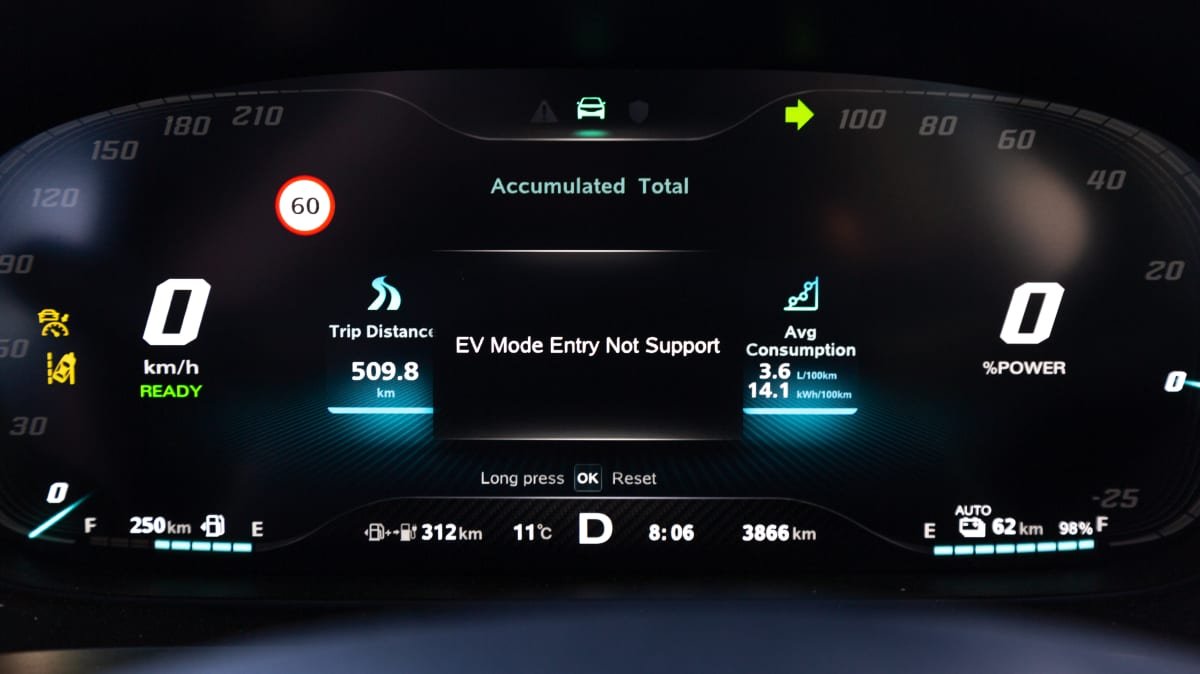
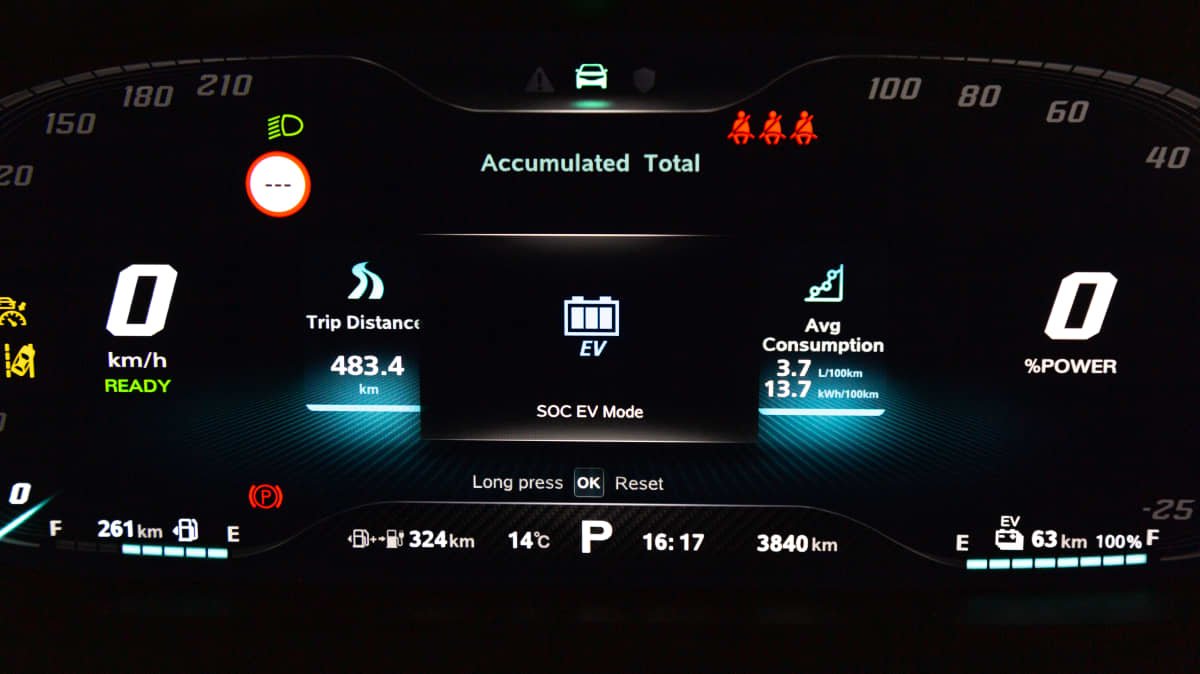
Basically, it’s a function of power demand from the climate control system. On a colder morning, the car requires the petrol engine to warm everything up. Every morning, on the car’s first drive, it needs to ‘warm up’ before being able to be driven in electric mode.
And when I say every morning. It does this every, single, morning. I can’t even read the message without imagining our favourite Jedi master’s patronising voice saying it out loud.
If you’ve been driving for a while however, and make a short stop, you can re-enable EV mode as soon as you set off again.
Now that the weather is warming up, we’ll keep an eye on it to see if a higher ambient temperature helps keep the car more ‘defrosted’ and ready for silent driving first thing in the morning.
That said, and with EV mode enabled, the HS tootles along quite happily, even at freeway speeds.
Fair to note, I wasn’t trying to explore the performance envelope of the car and maintained a cruising speed to as not to trigger any input from the 1.5-litre turbo petrol engine.
The whole trip to the location was conducted on electric drive, and as expected, I reached a point on the way home where the battery was depleted, and the car switched to petrol.
The result? A very reasonable 61km of electric range.
| 2021 MG HS PHEV Essence | |
| Length | 4574mm |
| Width | 1876mm |
| Height | 1685mm |
| Wheelbase | 2720mm |
| Boot volume | 451L / 1275L |
| Towing capacity | 1500kg braked, 750kg unbraked |
To be honest, this was more than I expected as there is minimal range recovery from regenerative braking function while driving, and from previous experience, freeway touring isn’t the most electric-friendly environment for efficiency.
So, first question answered, and it is in line with the MG claim.
For the second point, how does the HS PHEV deliver in terms of real-world efficiency, you need to roll in the third question of charging regularity.
Basically, this is a ‘plug in’ car so to get the most out of it, you need to plug it in.
We’ve spoken to a number of electric and PHEV buyers over the past few months, and with a 100 per cent strike rate, every single one has set up a charging solution at home. It has simply become part of the decision process when buying an electric or plug-in car.
So, the idea that you’d end up with a car like the HS PHEV and not have anywhere to charge it, is a bit of a non-issue.
With that in mind, I have been leaving it on charge (on a standard 10-amp wall socket) while it has been parked at the office during the day, and then driving as often as I can in the electric mode.
Well, once ‘EV mode entry not support’ Yoda has sorted its stuff out.
Over about 400km, I have averaged 1.9L/100km, which is marginally above the claim of 1.7L/100km, but still achievably low.
Even if not charged, or driven with the petrol engine in play, things have only gone as high as 3.0L/100km on mostly urban running.
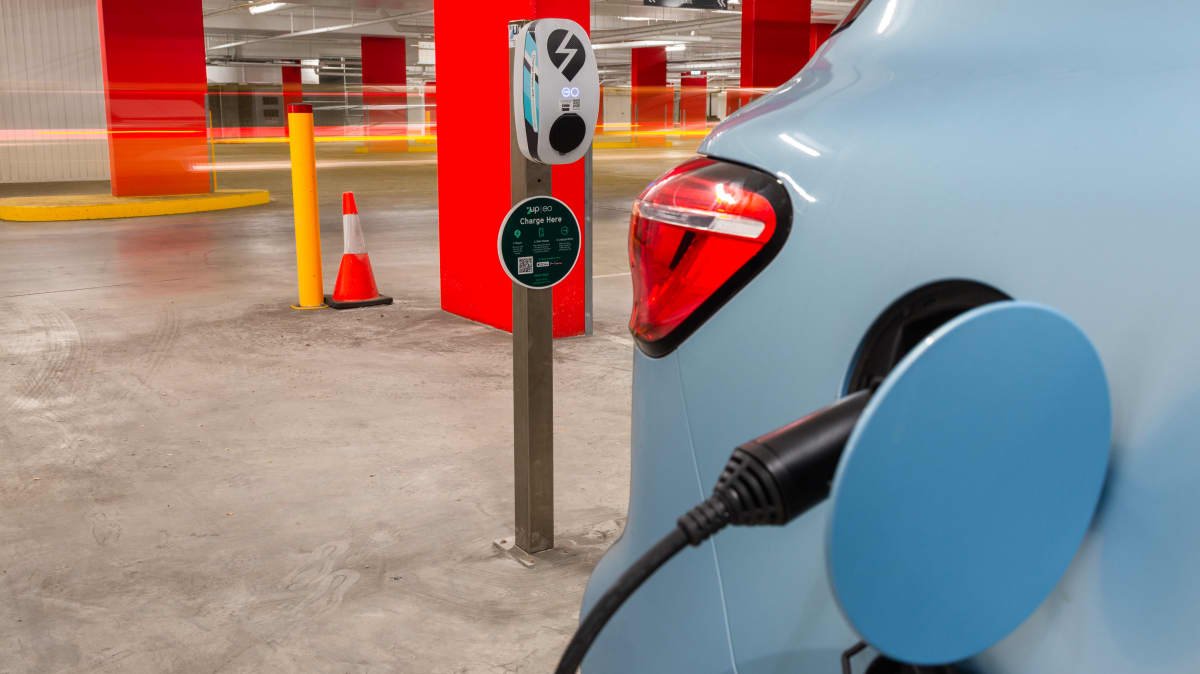
Charging is simple enough, using the supplied cable, although I have found it a bit fiddly when locking the car.
Essentially, when you plug in the charger you can hear it ‘lock’ into place, but if you aren’t leaving the car right away, it will sometimes unlock and then if you lock the car, you have done so with the charging plug inactive, and the car wont charge.
I can’t tell if this is a function of the plug or the socket on the car, but have been able to reliably keep things working away by connecting the charger as the last thing I do before locking the car, as that seems to ‘lock’ everything in place.
However, to the same effect, you can’t see where things are in terms of charging status unless you unlock the car, open the front door and press the power button, but doing this sometimes unlocks the charger and you don’t see anything anyway.
If that sounds a little confusing, it is, and is the big area I feel MG could improve moving forward. As such, the technology in the car will be the crux of our next instalment.
| 2021 MG HS PHEV Essence | |
| Engine configuration | 1.5-litre four-cylinder turbo petrol with single electric motor |
| Power | 189kW (combined) – 90kW (electric), 119kW at 5500rpm (petrol) |
| Torque | 370Nm (combined) – 250Nm @ 4300rpm (petrol only) |
| Transmission | 10-speed automatic |
| Drive type | Front-wheel drive |
| Tare weight | 1755kg |
| Fuel consumption (combined-cycle claim) | 1.7L/100km |
| Battery and range | 16.6kWh battery / 52km claimed WLTP electric range |
| Key competitors | Toyota RAV4 Hybrid | MG ZS EV | Mitsubishi Eclipse Cross PHEV |
month in, we’re finding the car can meet its claim for both range and overall efficiency. Aside from the little bugs, which are more frustrating than actual issues, the 2021 MG HS PHEV is working pretty well.
As always, shout out in the comments below if there is anything you want to know or would like to see us test with the HS PHEV while we have it.
Read more about James Ward
[bsa_pro_ad_space id=15]