
[bsa_pro_ad_space id=14]
An Italian coachbuilder is celebrating the 60th anniversary of the original Alfa Romeo Giulia Tipo 105 with this meticulous ‘retromod’.

 0
0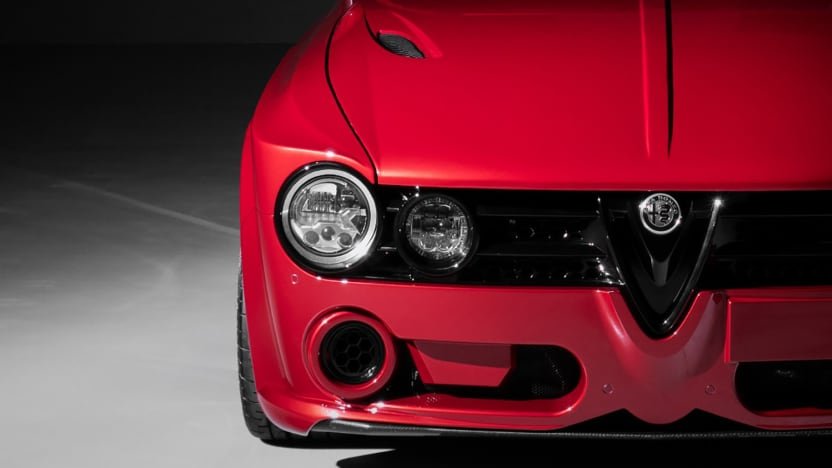
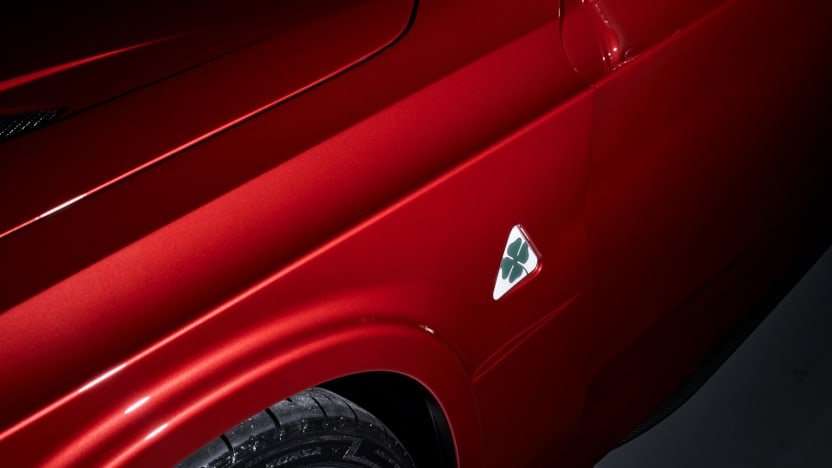
Here’s a restomod with a difference. To celebrate the 60th anniversary of the Alfa Romeo Giulia nameplate, Turin coachbuilder ErreErre Fuoriserie has unveiled a retro-styled Alfa Romeo Giulia Quadrifoglio that pays homage to the iconic 1962 original.
ErreErre Fuoriserie took the covers off its carbon-fibre bodied tribute in Italy this week, and the design influence of the original Giulia ‘Tipo 105’ of the 1960s are immediately apparent.
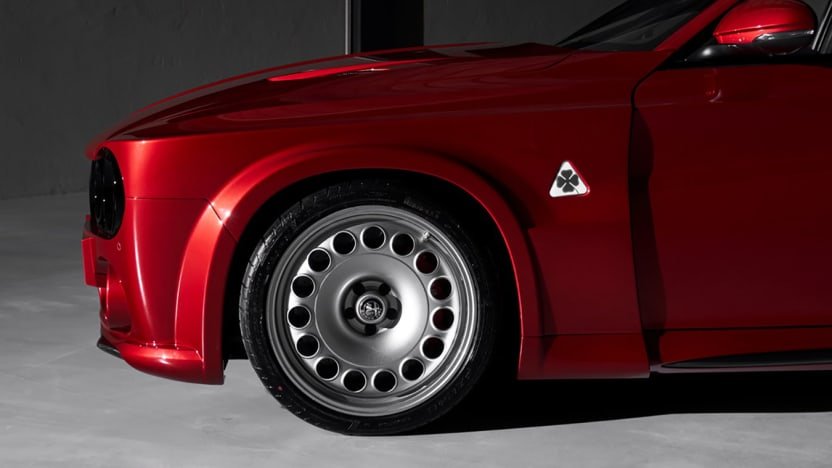
Out front, the biggest visual cue to the 1962 original are the four round headlights, which flank a redesigned grille that looks more in keeping with Alfa models of decades ago.
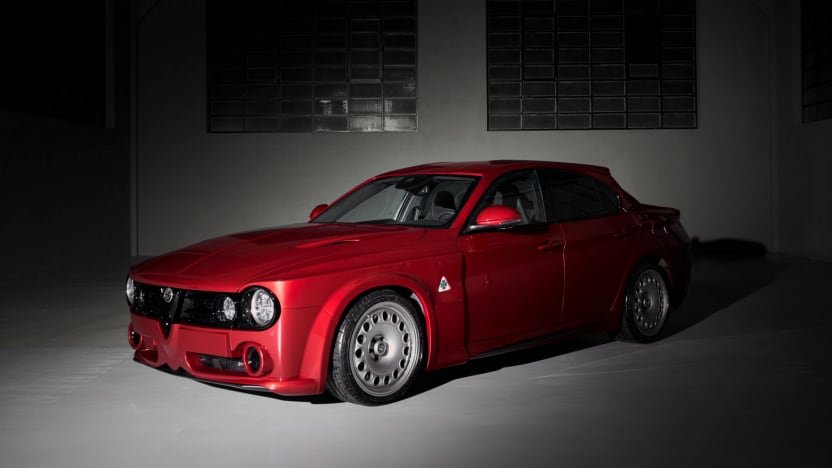
Flared wheel arches house 15-hole alloy wheels designed to look like the original’s iconic ‘telephone dial’ steel wheels.
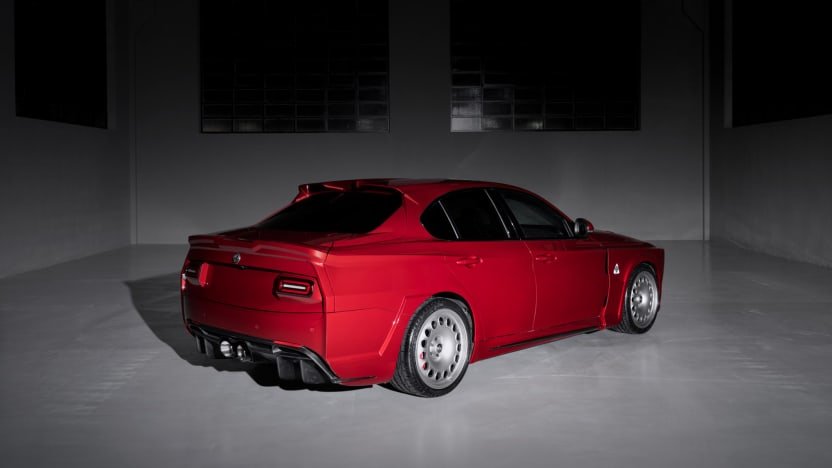
The car’s rear end has also been redesigned, with a squarer profile, new rectangular tail-lights – sourced from a Mercedes-Benz G-Wagen – and twin spoilers, one mounted on the roof and the other on the bootlid. Twin exhaust pipes peek out from a new rear diffuser.
The overall design is much boxier than the current Giulia and channels not only the classic shape of the Alfa Romeo Giulia Tipo 105, with elements of the Italian marque’s later 155 and SZ models thrown in.
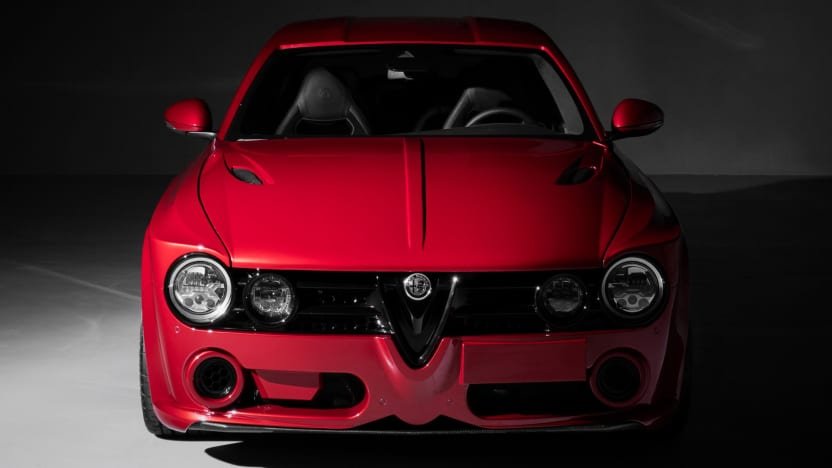
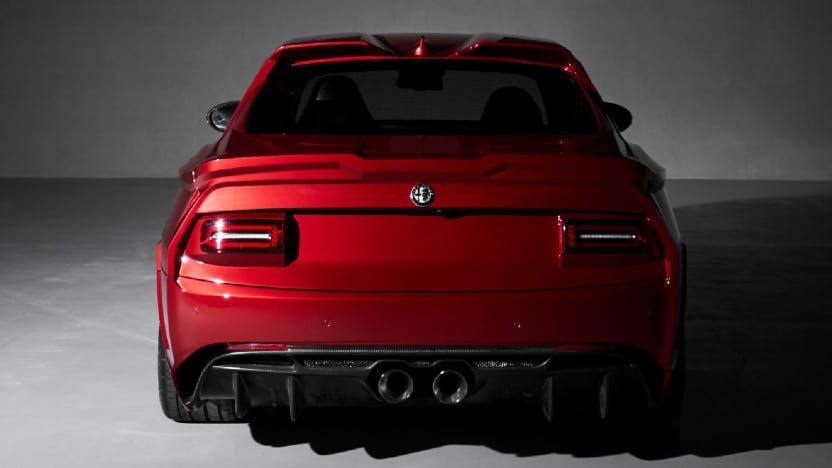
ErreErre Fuoriserie says every panel of the current Giulia Quadrifoglio has been replaced on what the company’s ‘retromod’ design.
And thanks to the entire body now being fabricated out of carbon fibre, ErreErre Fuoriserie’s homage weighs around 200kg less than the donor car.
While the exterior modifications are visually striking, the ‘retromod’ treatment hasn’t found its way into the cabin or under the bonnet, where the car remains steadfastly contemporary.
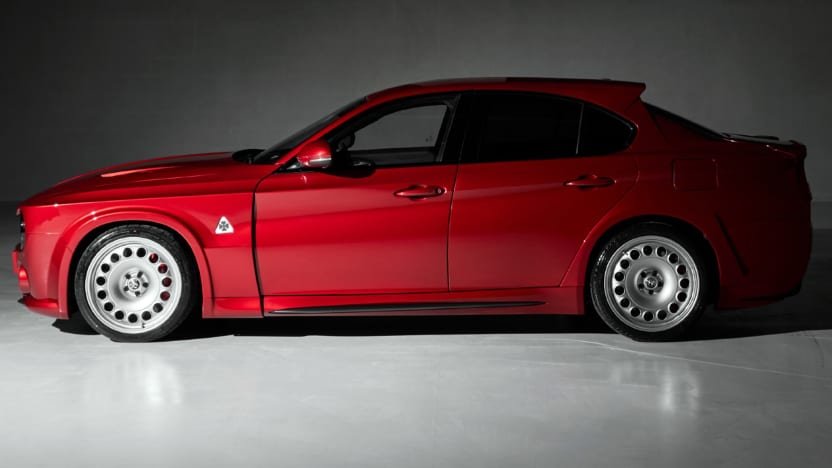
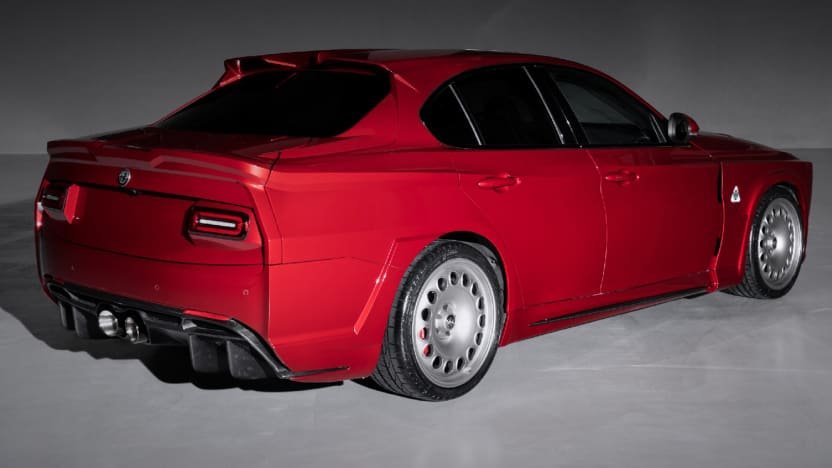
And that’s no bad thing, with the Quadrifoglio powered by a 2.9-litre Ferrari-sourced twin-turbo V6 making 375kW and 600Nm.
While no performance figures have been quoted, although thanks to that 200kg weight saving, it’s reasonable to assume ErreErre Fuoriserie’s homage should better the regular Giulia’s 3.9-second 0-100km/h claim.
It isn’t cheap, however. ErreErre Fuoriserie has placed a €245,000 ($AU364,000) price tag on its Giulia homage, with the caveat you have to provide your own Giulia Quadrifoglio donor car which in Australia runs to $143,500 plus on-road costs.
The original Alfa Romeo Giulia ‘Tipo 105’ remained in production from 1962 to 1978, and at various points was powered by either a 1.3-litre twin-cam petrol four-cylinder, 1.6-litre twin-cam petrol four-cylinder or 1.8-litre Perkins diesel engine.
It remained visually largely unchanged over its 16-year lifespan, ensuring its iconic status today.
Read more about Rob Margeit 
[bsa_pro_ad_space id=15]