
[bsa_pro_ad_space id=14]
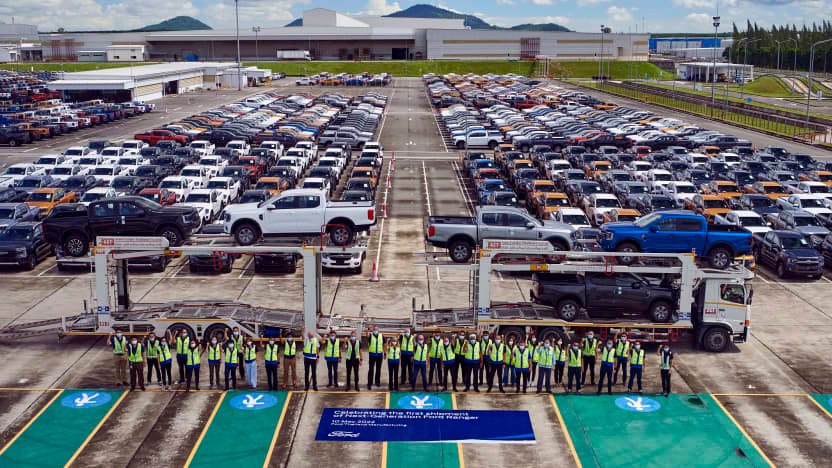
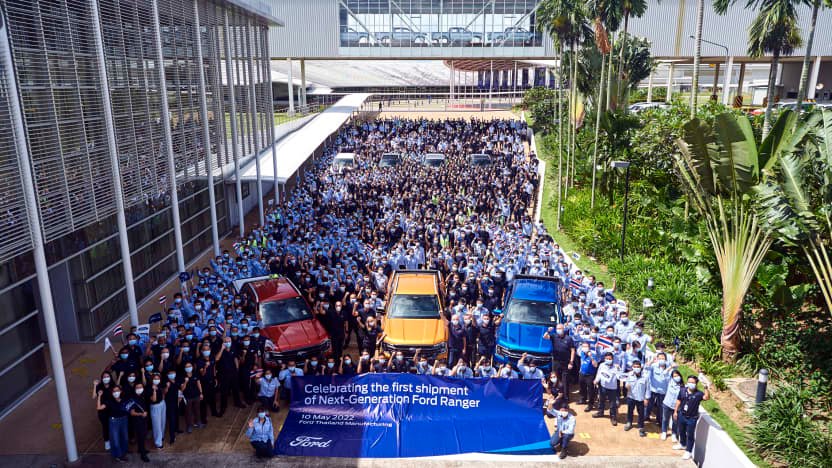
The first shipments of the new-generation Ford Ranger have rolled off the production line in Thailand and are on their way to Australia, ahead of showroom arrivals from June onwards.

 0
0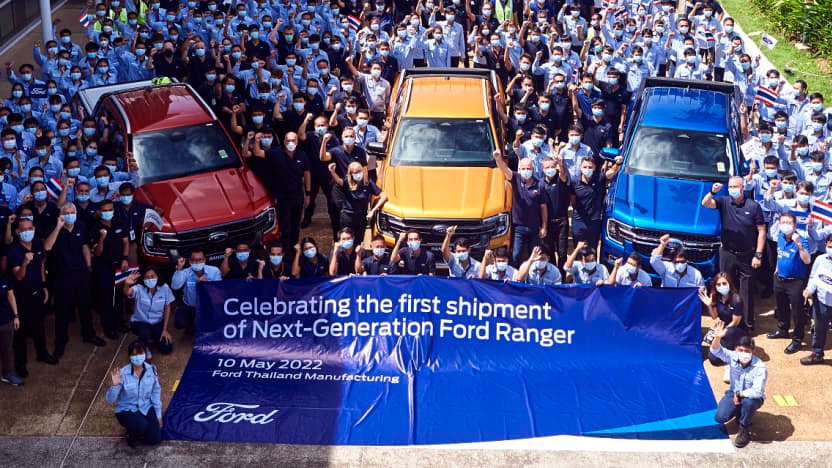
The new-generation Ford Ranger is a step closer to Australia after Thailand factory workers completed a send-off ceremony for the first batch of vehicles to roll off the production line.
The successor to Australia’s second-biggest selling vehicle behind the Toyota HiLux is due to arrive in showrooms from June onwards, pending any unforeseen delays.
As previously reported, Ford dealers have been advised twin-turbo 2.0-litre four-cylinder diesel variants will begin to arrive first, ahead of the highly anticipated turbo diesel 3.0-litre V6 (TDV6).
Demand for the TDV6 is higher than anticipated, with dealers reporting more than 70 per cent of initial orders being for V6 versions of the Wildtrak, Sport and XLT.
The Ford Performance Ranger Raptor – powered by a twin-turbo 3.0-litre V6 petrol engine – is due to go into production in the coming weeks, ahead of the first Australian deliveries in July or August.
However, Ford has also advised dealers there will be some production delays during the ramp-up of the new model – due to the global semiconductor shortage – which will push out waiting times.
Customers who place an order today for a new Ford Ranger are being advised to expect delivery from October through December – and in some cases early next year.
However, availability will also depend on model grade, factory options, and colour selection.
Eager Ford Ranger buyers have started contacting regional dealers across the country to secure a particular vehicle, as many metropolitan showrooms have already sold out of their first allocations.
Ford says it distributes cars fairly across its entire dealer network – based on the sales rate of each showroom – which means savvy customers are finding some unsold stock in remote towns.
Meantime, the Ford factory in Thailand is ramping up to full-scale production and has recently added a second shift, meaning the assembly line will soon operate almost around the clock.
The production boost – and the extra allocations on the assembly line due to the absence of the old Ford Ranger-based Mazda BT-50 – means Australia will likely get better access to vehicle supply.
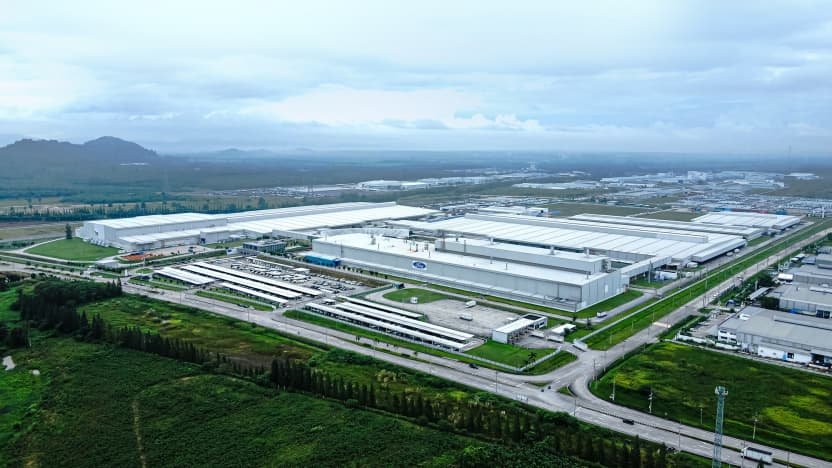
Since Mazda switched from Ford to a partnership with Isuzu – which assembles the D-Max and new BT-50 in Thailand on the same production line – Ford can now focus solely on its own vehicles.
Following the end of the Ford and Mazda partnership which lasted almost 50 years – including 25 years in Thailand – Ford made its biggest investment in the Ranger factory since the day it was built.
Last December, Ford announced a $900 million investment and the addition of 1250 new jobs – boosting the total production workforce to 9000 employees – as well as doubling the number of assembly robots.
“With the addition of 356 state-of-the-art robots at the body shop and paint shop, this brings the level of automation (across both sections) from 34 percent to 80 percent and 69 percent, respectively,” said Ford in a media statement.
The latest injection of funds brings the total investment by Ford in production facilities in Thailand to $3.4 billion over 25 years.
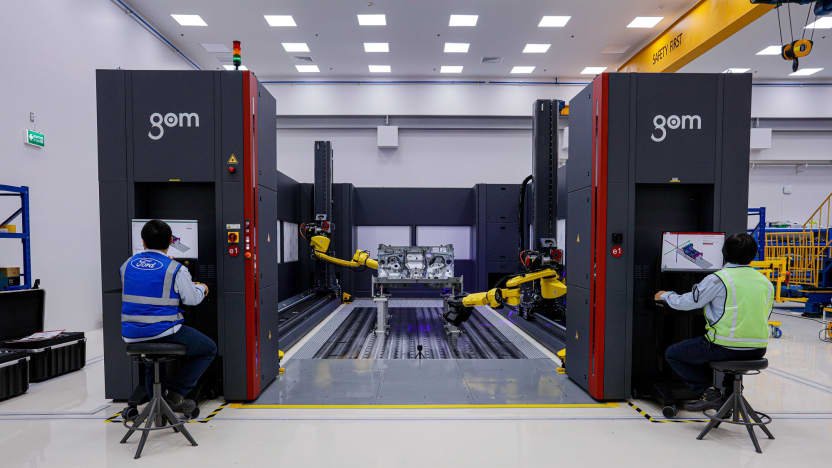
As part of its investment, Ford says it is the first automotive manufacturer to implement ScanBox technology in Southeast Asia.
“This latest surface scan capability improves the time used to accurately measure the whole vehicle by five times during the assembly process, helping Ford to increase efficiency in problem-solving for better quality control,” said the Ford media statement.
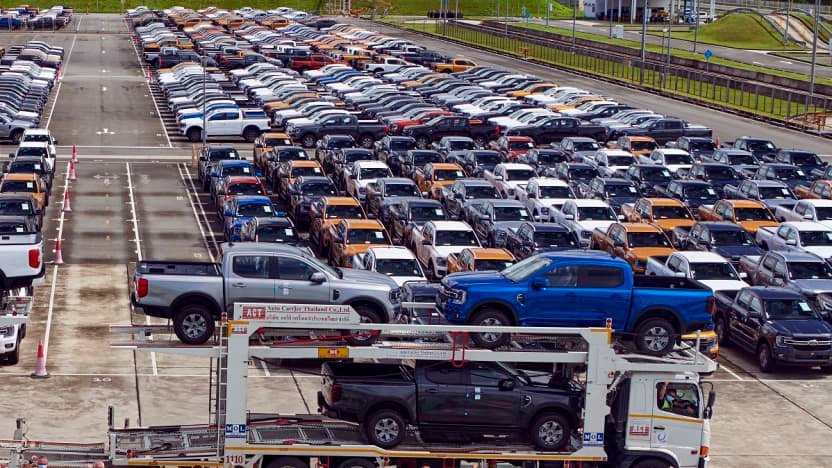
Ford says it has also has increased its production capability for “multi-variant” ute production.
“By increasing model flexibility, the (factory) can produce multiple cab styles – single-cab, open-cab and double-cab – on the same production line,” said Ford.
“This allows more flexibility in planning and scheduling, so the plant can react more quickly to customer demand and reduce customer waiting time for a new vehicle.”
Read more about Joshua Dowling 
[bsa_pro_ad_space id=15]