
[bsa_pro_ad_space id=14]
Although the Petersen Automotive Museum in Los Angeles remains closed to the public, the staff have been anything but idle while waiting for the county’s permission to resume operations. Ready to wow guests upon their return is a retrospective on horsepower and innovation titled Supercars: A Century of Spectacle and Speed. The collection, comprising roughly 30 vehicles made from 1913 through 2005, was curated by Bryan Stevens, the Petersen’s director of exhibitions. While giving Robb Report a private, and socially distanced, tour, he notes the inspiration and challenges unique to the presentation.
“It wasn’t an exhibit on our calendar but, after the virus situation, we wanted to reopen with a bang, with something that was really enticing,” says Stevens. “This exhibit came together much faster than most, going from the initial idea to having all the cars in place in less than three months. But, given the financial implications of the museum’s long-term closure due to COVID-19, one of the bigger challenges was keeping costs to an absolute minimum.”
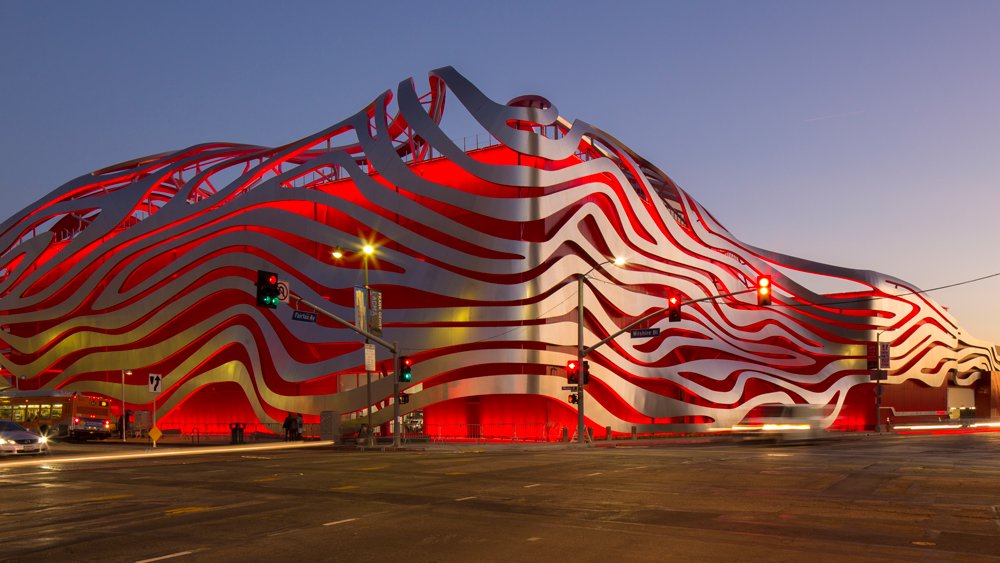
The Petersen Automotive Museum in Los Angeles.
Photo by David Zaitz, courtesy of the Petersen Automotive Museum.
To do so, the team was forced to source most of the examples locally, although being in Southern California made that task considerably easier. But some of the automobiles came from other parts of the country and completely at owner expense, including insurance, which makes the field all the more remarkable and gives evidence of how valued the facility is to car collectors and enthusiasts alike.
The supercar assemblage is set on the museum’s third floor and fronted by a 1988 Lamborghini Countach 5000QV, a model that spectacularly celebrates form above function and exemplifies the criteria required to meet the Petersen’s selection process. “While the term is subject to much debate, we generally define ‘supercars’ as road-going vehicles that are among the most superlative and extroverted of their respective eras,” says Stevens. “More specifically, supercars always must have some readily apparent—and never subtle—combination of extreme styling, power, performance, impracticality and exclusivity due to high cost and low production. The cars in this exhibit all share these characteristics, regardless of when they were built.”
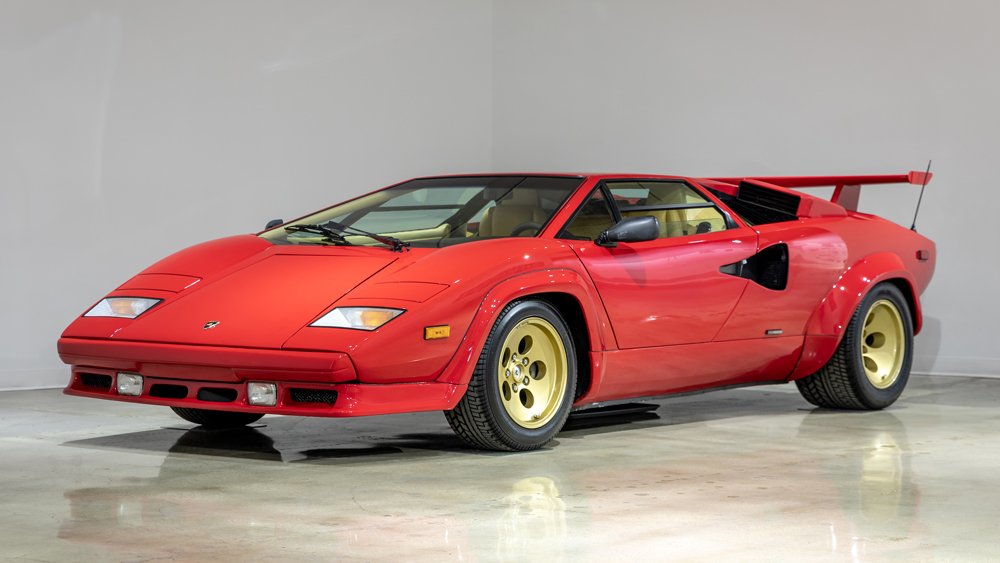
The 1988 Lamborghini Countach 5000QV that’s become a temporary resident of the museum’s third floor.
Photo by Ted7, courtesy of the Petersen Automotive Museum.
Arranged loosely by chronology, the display begins with a 1913 Mercer Type 35-J Raceabout formerly owned by the late Hall-of-Fame driver Phil Hill. Capable of reaching nearly 100 mph, the model had a variant finish second in that year’s Indianapolis 500, the contest’s third running.
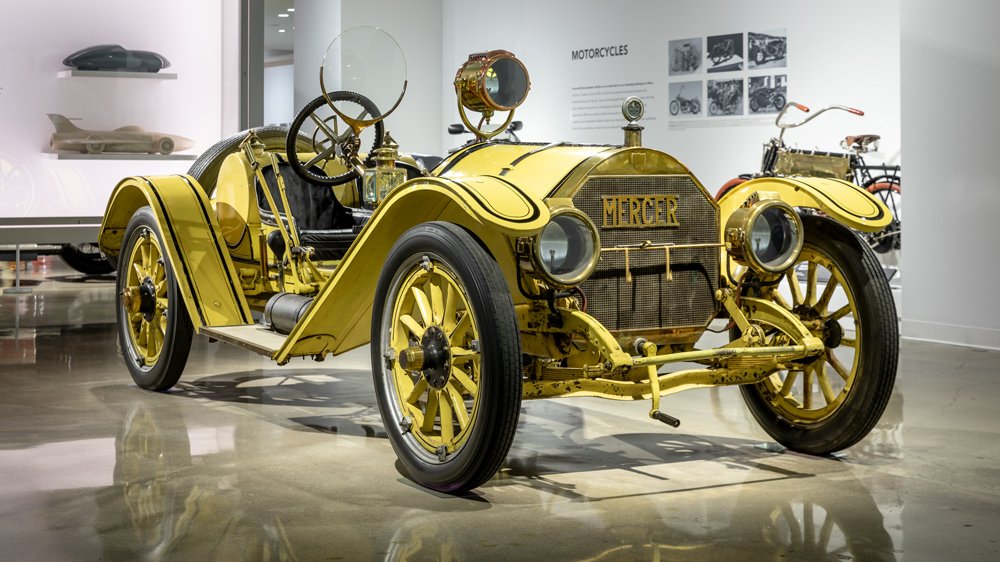
The 1913 Mercer Type 35-J Raceabout on display.
Photo by Ted7, courtesy of the Petersen Automotive Museum.
Close to the Mercer sits a 1938 Delahaye Type 145 Coupe belonging to Petersen board member Peter Mullin. One of four chassis commissioned to compete in France’s Prix du Million race, it was later bodied by Henri Chapron. The art-deco mantle covers a 184 hp, 4.5-liter V-12 that allows for a top speed of 120 mph.
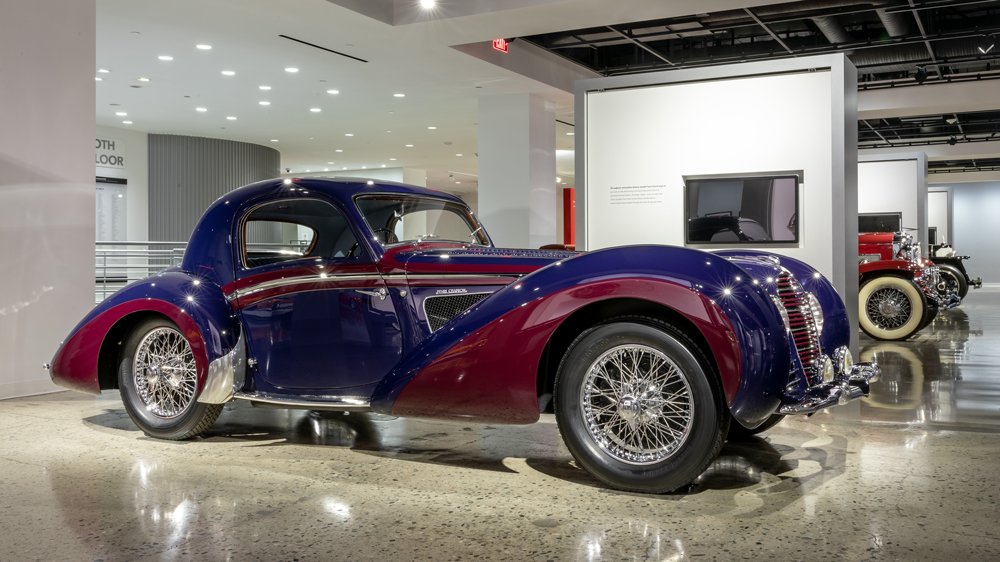
Petersen board member Peter Mullin’s 1938 Delahaye Type 145 Coupe.
Photo by Ted7, courtesy of the Petersen Automotive Museum.
Anchoring the middle of the display floor is a winning trifecta if ever there was one—a Jaguar, Ferrari and Shelby Cobra that helped define the design DNA of the automobile’s golden age in the 1950s and ‘60s. The 1956 Jaguar XKSS, famously owned by actor Steve McQueen, is not only one of the most renowned cars in the museum but, surprisingly, one that gets exercised on promotional drives more than most any other at the Petersen. Based off the marque’s D-Type, it’s among only 16 examples that survived a factory fire in 1957.
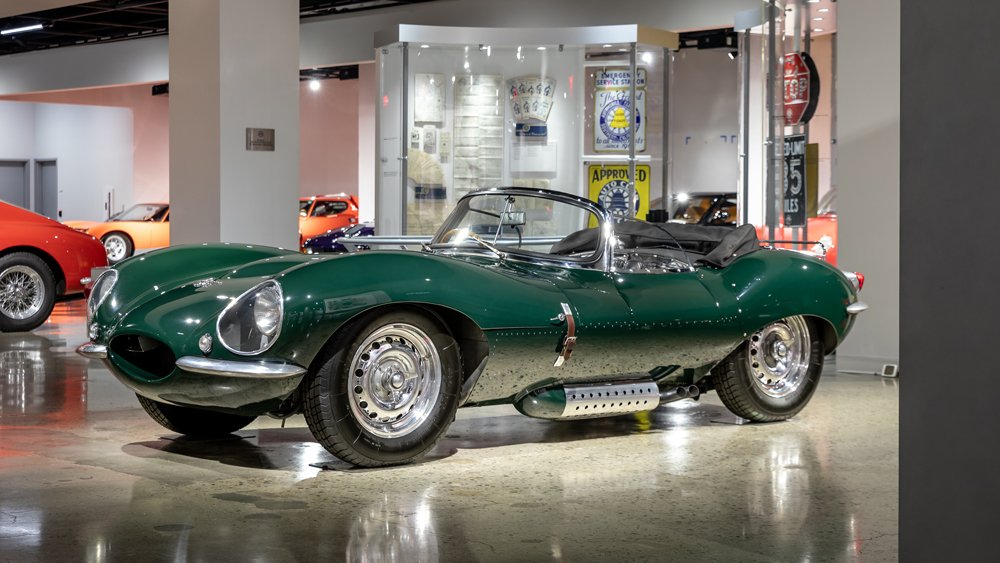
This 1956 Jaguar XKSS once belonged to actor Steve McQueen.
Photo by Ted7, courtesy of the Petersen Automotive Museum.
Adjacent to McQueen’s former Jag is a rare and important Prancing Horse, a 1959 Ferrari 250 GT Long Wheelbase (LWB) Berlinetta. One of seven built, it’s an interim example developed to showcase the aerodynamic direction Ferrari planned to take with its upcoming competition cars at the time, and was the successor to the 250 GT Tour de France.
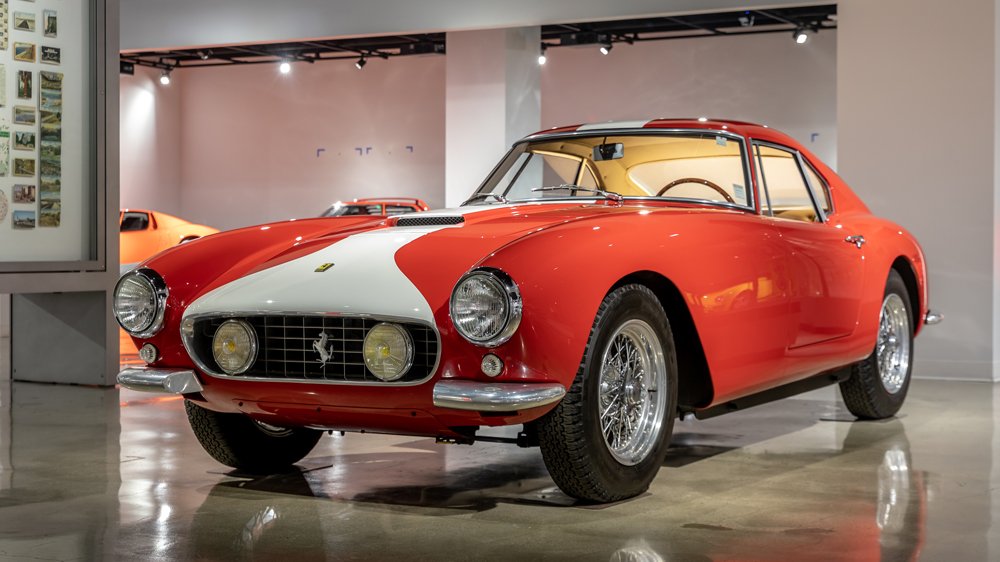
A 1959 Ferrari 250 GT Long Wheelbase (LWB) Berlinetta.
Photo by Ted7, courtesy of the Petersen Automotive Museum.
Rounding out the trio is a 1967 AC Shelby Cobra 427; its placard referring to Cobras as “the fastest American automobiles of their time.” And no wonder, as it carries a 427-cubic inch V-8 with 360 hp and the ability to propel the roadster to 160 mph. Although replicas abound, this is one of the 260 originals produced. Even more impressive is that its glovebox bears Carroll Shelby’s handwritten signature and message to the current steward, racer Tomy Drissi.
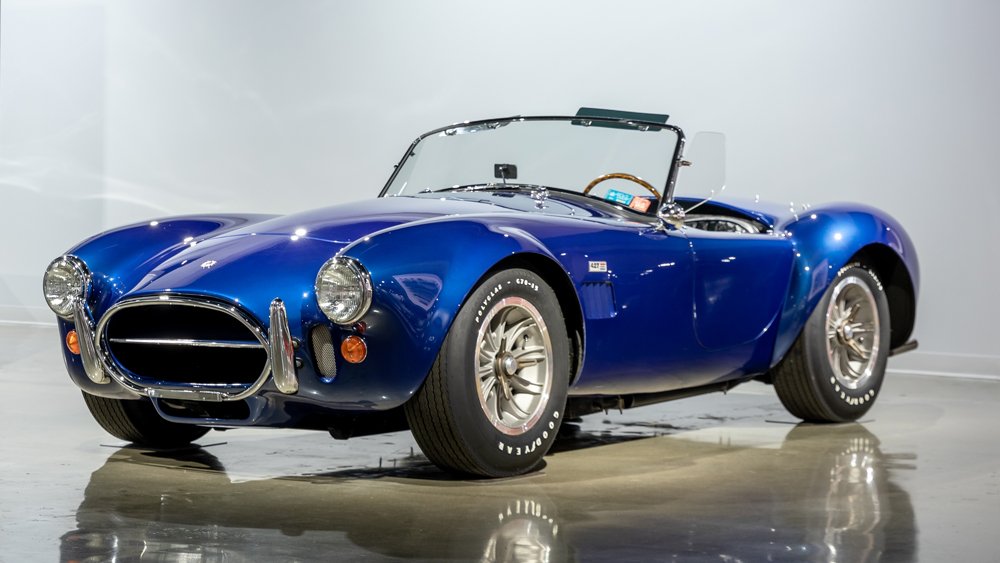
A 1967 AC Shelby Cobra 427 signed by Carroll Shelby.
Photo by Ted7, courtesy of the Petersen Automotive Museum.
At the back wall, almost a dozen more vehicles continue the timeline, starting with a favorite of Stevens—a 1968 Lamborghini Miura P400. “It’s not the fastest, or the most valuable, or the most dramatic looking, but it’s the icon—the car that really cemented the modern two-seat mid-engine supercar paradigm,” he says. “I love the idea of incredible performance coming from such a trim, jewel-like package. The profile, to me, is automotive perfection.”
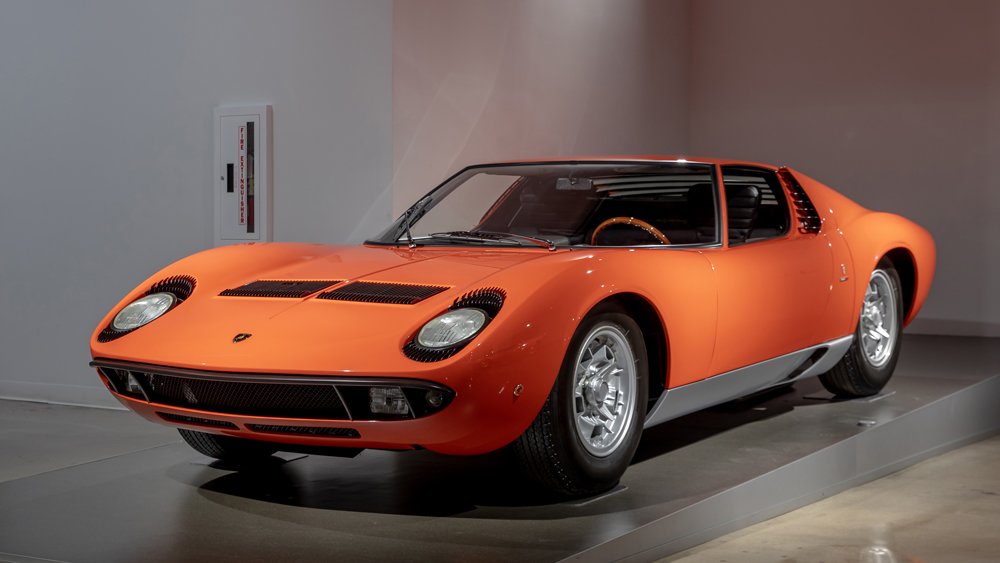
The exhibition’s example of a 1968 Lamborghini Miura P400.
Photo by Ted7, courtesy of the Petersen Automotive Museum.
My personal highlight was the opportunity to stand inches from a 1998 McLaren F1 “LM-Specification” in immaculate condition. The Gordon Murray–designed masterwork is one of only two original F1 examples given “Le Mans” modifications by McLaren to bolster aerodynamic performance. Wearing papaya orange as a tribute to Bruce McLaren’s racing livery, the 680 hp showstopper has a top speed of 225 mph.
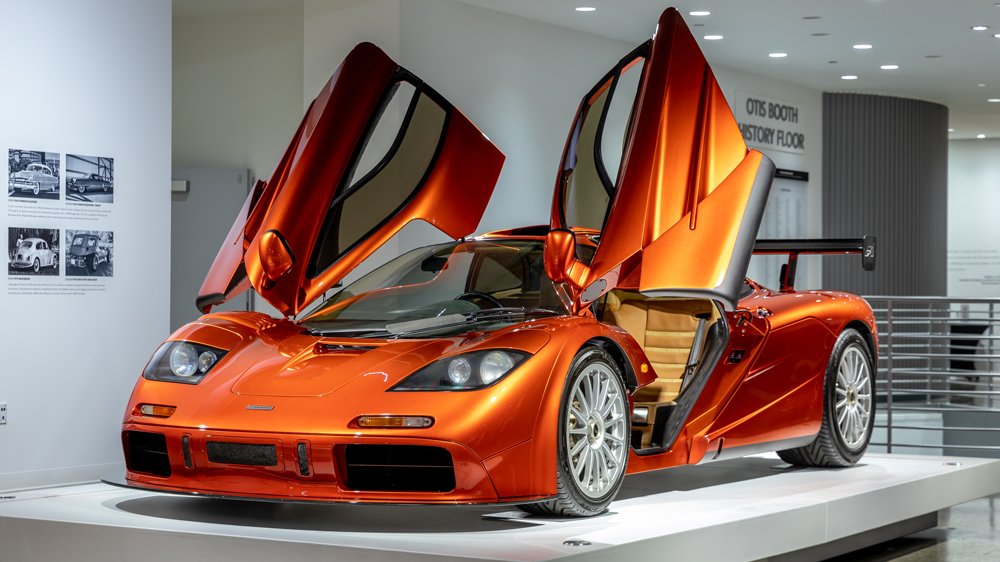
The 1998 McLaren F1 “LM-Specification” on loan to the Petersen.
Photo by Ted7, courtesy of the Petersen Automotive Museum.
While the F1 is still considered by many connoisseurs to be the benchmark of automotive aesthetics and performance, it’s a 2005 Maserati MC12 that bookends the exhibition. Built to be campaigned in the FIA’s GT category of racing, the 630 hp Maserati shares Ferrari’s platform for the Enzo Ferrari and comprised a run of 55 in total, with 50 being street-legal cars for the public. The example present was made for, and given to, motorsport great Michael Schumacher, who helped test the MC12 during its development.
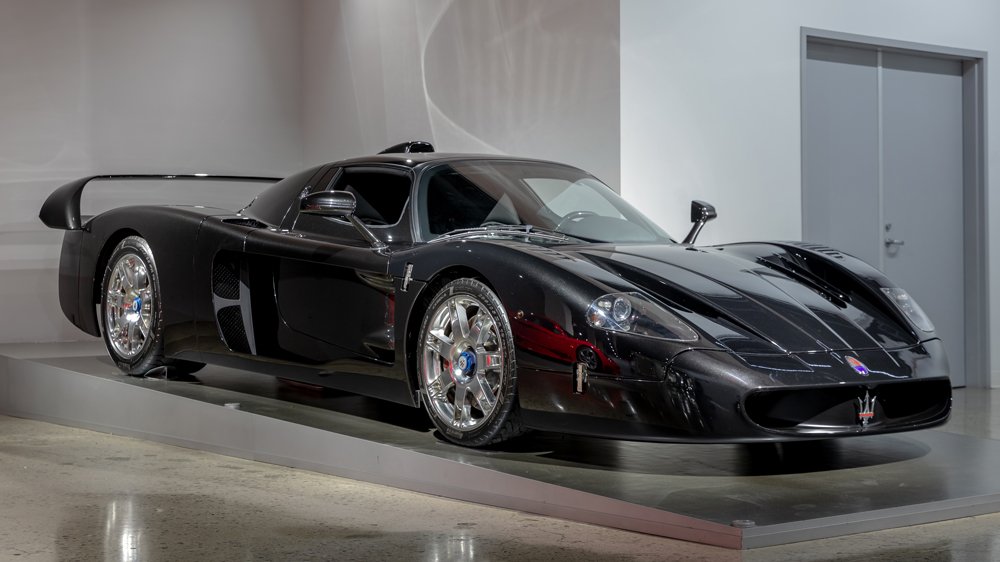
The 2005 Maserati MC12 made for F1 icon Michael Schumacher.
Photo by Ted7, courtesy of the Petersen Automotive Museum.
According to Stevens, the decision to end the exhibition with the MC12 and not include more recent exotics was simple. “We are essentially identifying the Bugatti Veyron as the start of a new era, the hypercar era,” he states. “Bugatti was the first one to really go with the numerics of 1,001 hp, more than a million dollars, 250+ mph and 16 cylinders. It was a level above everything else. Even Bugatti has acknowledged it deliberately went with those numbers to create a new category. So, if everything works out, we plan to follow up with a hypercar exhibit starting in the spring.”
As it stands, the goal is for the two exhibitions to eventually run concurrently and provide unprecedented access to history’s apex cars. But as these are also unprecedented times, the Petersen must wait for the city to give its green light.
[bsa_pro_ad_space id=15]