
[bsa_pro_ad_space id=14]
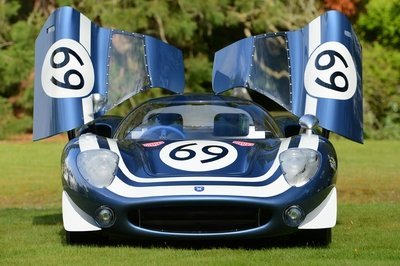
Back in 1997, a Japanese collector offered $15.7 million (in today’s money) to buy the unique Jaguar XJ13. His offer, three times the asking price of a Ferrari 250 GTO at the time, was denied. Now, there’s something that looks almost like the XJ13 but performs better in every area. Welcome the Ecurie Ecosse LM69, the ultimate tribute to Jaguar’s first mid-engined car, the stillborn monster that should’ve intervened in the Ford vs. Ferrari war.
Under the baton of Frank Raymond ’Lofty’ England, Jaguar had won the 24 Hours of Le Mans an incredible five times throughout the ’50s with the Malcolm Sayer-penned C-Type and its successor, the D-Type but, then, Jaguar’s star in sports car endurance racing faded away as Ferrari took over as the dominant force. By the early ’60s, the Leaping Cat was still racing in long-distance events but on the nose of the elegant E-Type that was a production-based Grand Tourer, nowhere near a prototype that became a thing at Le Mans and elsewhere in endurance racing as Ferrari debuted the 250 P in 1963, the same year when Lola unleashed the Mk. 6 GT, the forefather (in some ways) of Ford’s original GT.
William Haynes, Jaguar’s Head of Engineering, had been toying around with the idea of building a mid-engined prototype since the dawn of the ’60s when he realized how effective a midship layout is in other forms of motorsport such as Formula 1. This idea was coupled with another one that’d been cooking in Jaguar’s ovens for quite a while – that of building a V-12 that would be used as a stressed member of the chassis. The end result was the Jaguar XJ13, a car that was outgunned almost right from the moment it was born and, as FISA banned big-engined prototypes at the end of ’67, it also had no place to race on the world stage. Now, Ecurie Ecosse, the historic Jaguar team that won the 24 Hours of Le Mans with Jaguar machinery in the ’50s, brought the XJ13 back to life or, rather, an XJ13 built to 1969 rules. Mark us intrigued!
[bsa_pro_ad_space id=15]